


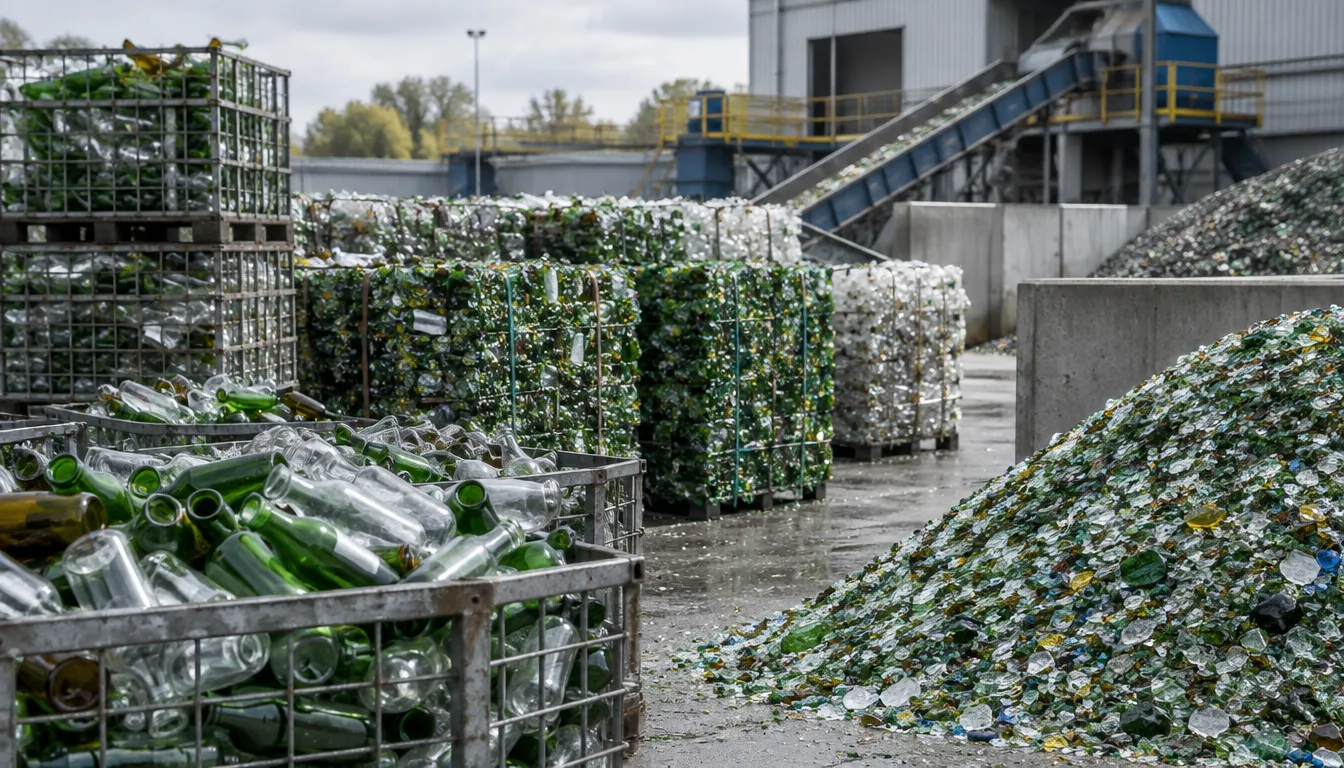
Bulgaria’s glass packaging industry has launched a national Close the Glass Loop platform to raise collection for glass recycling, aiming to help meet the EU’s 90% target by 2030.
Bulgaria’s glass packaging value chain has united to launch a new national platform for glass collection and recycling, joining a Europe-wide push by trade body FEVE to close the loop on packaging glass before 2030.
Close the Glass Loop Bulgaria brings together extended producer responsibility organisations, glass manufacturers and recyclers, waste management operators and municipalities. Georgi Slavchev, procurator of coordinator Ecobulpack, said Bulgaria already collects 84% of its glass packaging waste for recycling, according to Close the Glass Loop data for 2024, giving the country a stronger starting point than several of its regional peers as it works to close remaining gaps in collection.
Vanessa Chesnot, head of public affairs and product policy at FEVE, said the aim is to move closer to a shared target of collecting 90% of glass packaging for recycling across the European Union by 2030. Close the Glass Loop is FEVE’s pan-European campaign, running country by country to close gaps in collection infrastructure, and Bulgaria becomes the latest member state to formalise a national coalition around glass recycling rather than leave collection rates to individual municipalities.
BA Glass, which operates two glass packaging production facilities in Bulgaria, is backing the initiative as part of its wider European push on circularity. Marco Marques, the company’s managing director for south-east Europe, said higher-quality recycled glass, known as cullet, lets manufacturers produce new packaging with a lower carbon footprint while cutting reliance on virgin raw materials. “By working together across the value chain, we can strengthen Bulgaria’s circular economy, support local manufacturing and unlock the full potential of glass recycling,” Marques said.
Furnace energy is the glass industry’s largest source of direct emissions, and the amount of cullet in a furnace charge is one of the few levers that cuts that energy use without a capital-intensive rebuild. Recycled glass melts at a lower temperature than the raw sand, soda ash and limestone used to make new glass, so furnaces running a higher cullet share need less fuel to reach melting temperature, translating directly into lower CO2 output per tonne of glass produced. That link between collection rates and furnace emissions is why FEVE treats national recycling infrastructure as a decarbonisation lever rather than only a waste-policy question.
The Bulgarian platform mirrors similar circularity pushes across the glass sector globally, including a closed-loop window glass recycling scheme launched in Japan, as manufacturers look to cut furnace emissions by raising the share of recycled content in new glass. Glass recycling delivers one of the more direct energy savings available to the packaging industry, since cullet requires less energy to melt than virgin raw materials and can be reused indefinitely without losing quality.
Collection infrastructure varies considerably across the European Union, and FEVE’s country-by-country rollout reflects the fact that municipal waste systems, deposit schemes and industry funding models differ enough that a single EU-wide programme cannot substitute for national coordination. Each national platform brings together the same broad set of actors, producer responsibility bodies, manufacturers, recyclers, waste operators and local government, but the collection rate each starts from, and the infrastructure gaps it needs to close, differ by country.
Marques called the Bulgarian launch “an important milestone” in strengthening the country’s circular economy and supporting local manufacturing. For an industry where furnace energy is the largest single source of emissions, converting collection-rate pledges into consistent cullet supply is the practical test facing every national Close the Glass Loop rollout, including Bulgaria’s own glass recycling ambitions.
The next stage for Ecobulpack and its partners is translating the coalition’s stated ambition into measurable gains in the collection rate, since the 84% figure already puts Bulgaria closer to the EU’s 90% goal than the launch of a new platform might suggest. Whether that final gap can close through better sorting at existing collection points or requires new infrastructure investment is likely to shape how quickly Bulgaria’s glass packaging sector can claim the emissions benefit that comes with a higher cullet share.
