


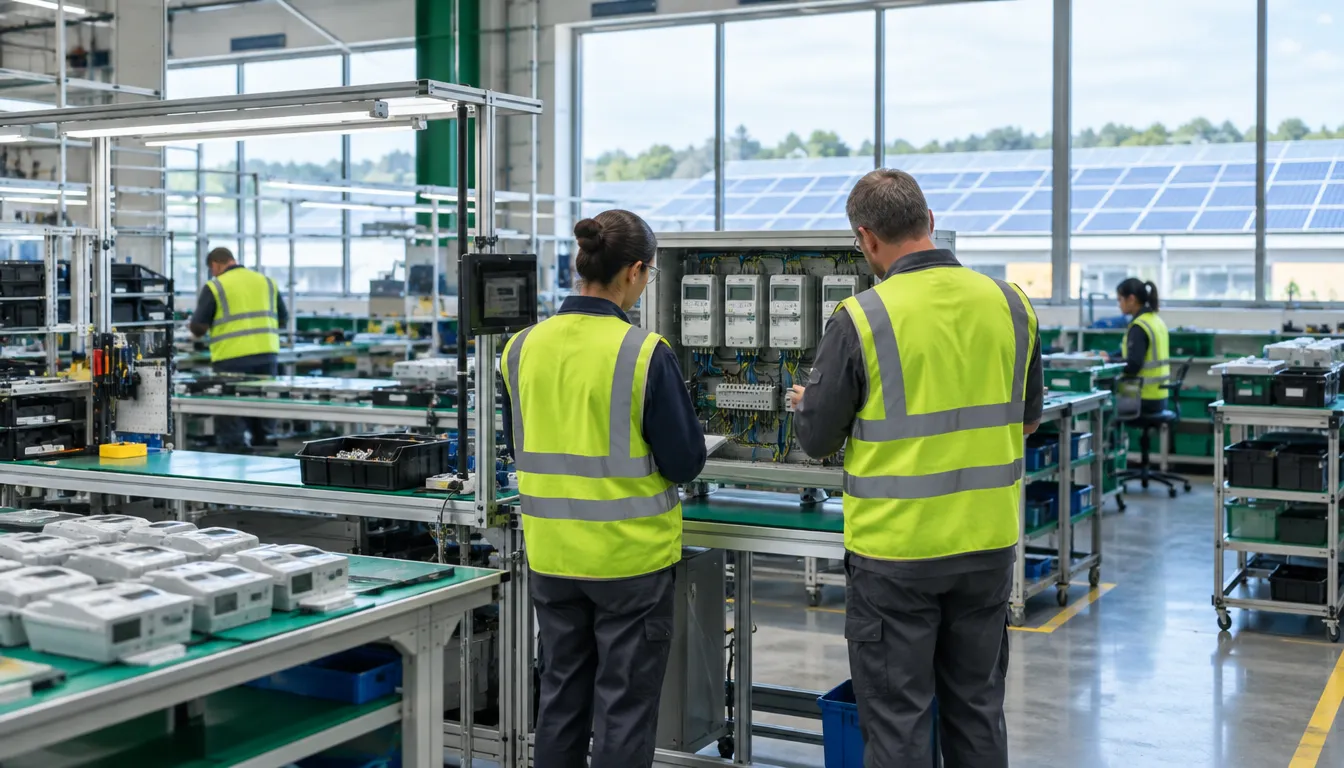
Logitech has launched Chain Reaction, a supply chain decarbonisation programme that pools clean energy purchasing and supports factory efficiency reviews across 17 suppliers, as it works towards halving Scope 3 emissions by 2030.
Logitech has announced Chain Reaction, a supply chain decarbonisation programme. It gives suppliers hands-on support to cut emissions and improve factory operations. The company said the programme launches with 17 key suppliers. Logitech made the announcement on 23 October. It says Chain Reaction supports its science-based target to halve Scope 3 greenhouse gas emissions by 2030.
Scope 3 emissions arise across a company’s value chain, which brings supplier factories within the scope of Logitech’s 2030 target. The company uses 2021 as its baseline. It says its total Scope 3 carbon footprint in fiscal year 2026 was 33% below that level. On those figures, about 17 percentage points of the 50% cut remain to be delivered before 2030. Chain Reaction is Logitech’s vehicle for supply chain decarbonisation. It gives suppliers direct operational support to build their own roadmaps.
Logitech describes four elements. The first is affordable clean energy. Suppliers pool their purchasing power to buy renewable energy instruments. The aim is competitive electricity prices and less exposure to energy price volatility and risk. Other sectors use joint purchasing too. Food and beverage groups formed a green ammonia buying alliance for the same reason.
Supplier-led factory reviews
The second element covers energy and greenhouse gas evaluations. Suppliers lead assessments of their own factories, looking at energy, thermal and mechanical efficiency. They then use the results to set reduction targets and roadmaps. The suppliers run the assessments themselves, so the findings stay with the teams that operate the equipment. That design reflects a view Logitech states directly: suppliers know their operations best.
The third element is expert support. Logitech will run technical workshops, roundtables and innovation sessions. It will also co-develop reporting tools with suppliers to simplify carbon accounting. Further support includes workshops on setting greenhouse gas baselines. Suppliers also get direct access to subject matter experts. Routes to pilot new ideas run through the Logitech Future Positive Challenge. A baseline is the starting point for any reduction target. Those workshops address the first step in supply chain decarbonisation.
Commercial incentives for suppliers
The fourth element links emissions work to commercial relationships. Logitech will build carbon transparency and decarbonisation into regular business reviews and new business awards. The company says this gives suppliers executive visibility for their progress. Emissions data then sits inside routine commercial discussions. A supplier’s progress can influence how it is treated in future awards.
Sree Chenincherry, Logitech’s Chief Supply Chain Operations Officer, framed the programme as an operational matter. “From an operational standpoint, decarbonization and efficiency go hand-in-hand,” he said. He argued that helping manufacturing partners cut energy waste produces lasting cost savings. Shifting to clean power also reduces volatility, he said.
Elaine Laird, Logitech’s Chief People and Sustainability Officer, put the emphasis on the factory floor. “Real value-chain decarbonization happens directly on the factory floor,” she said. Laird added that Chain Reaction gives suppliers practical tools, technical evaluations and clean energy options to pursue their own roadmaps.
Logitech did not name the 17 suppliers in its announcement. It also gave no dates for programme milestones and no emissions target specific to Chain Reaction. Those details will decide how far supply chain decarbonisation moves Scope 3 figures. Progress will show in Logitech’s future Scope 3 reporting, measured against the 2021 baseline.
For buyers elsewhere in industry, the structure is easy to read. Shared energy purchasing, supplier-led technical reviews, expert support and procurement incentives sit in one package. Manufacturers with long supplier lists can test the same approach on a small cohort first. A cohort of 17 gives Logitech a manageable group in which to test each element of its supply chain decarbonisation effort. Work of this kind depends on suppliers seeing a commercial return. Logitech’s use of business awards addresses that point directly, and its results will show whether the model travels.
