


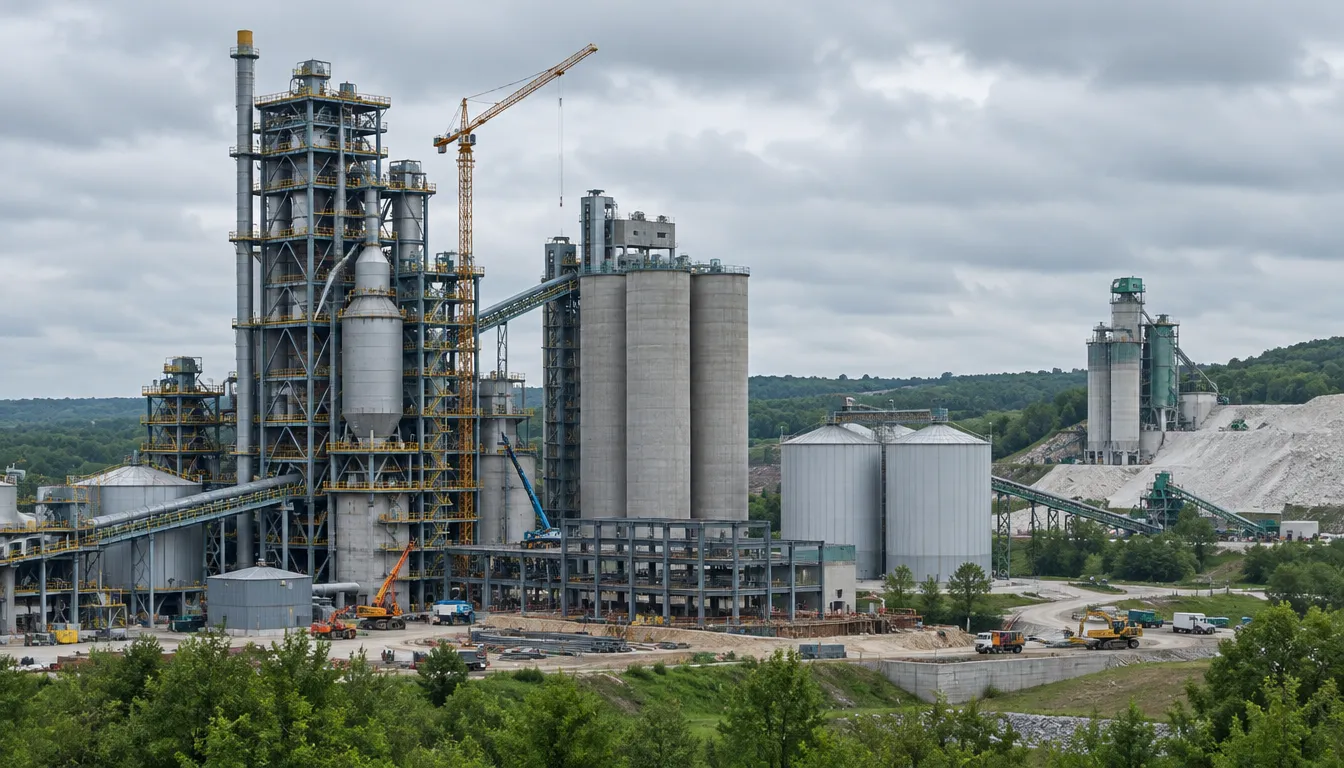
Meta has signed a multi-year deal to buy environmental attribute certificates for about 200,000 tons of Fortera low-carbon cement, giving the California start-up revenue visibility to finance its first commercial plant in Missouri.
Meta has signed a multi-year agreement to buy environmental attribute certificates (EACs) tied to about 200,000 tons of Fortera low-carbon cement. The companies announced the deal on 29 October. Neither has disclosed the financial terms or a specific contract length.
EACs are environmental credits that companies buy for lower-carbon materials. They let a buyer address supply chain emissions and help finance new manufacturing capacity without taking delivery of the product. The physical cement is sold to customers near the plant at market rates.
Fortera is a California-based building materials manufacturer founded in 2019. Its ReCarb technology captures industrial CO2 and turns it into feedstock for ReAct cement. Fortera says ReAct has a carbon footprint about 70% lower than ordinary Portland cement. Cement production accounts for about 8% of global CO2 emissions.
Fortera says ReCarb can be added to existing cement and lime plants. Manufacturers keep their kilns and distribution networks and can produce at cost parity with ordinary Portland cement. The company says the Meta deal gives it long-term revenue visibility to secure financing for new production facilities.
The certificates support the planned Fortera cement plant in Ste. Genevieve, Missouri, which would be the company’s first commercial plant. Planned capacity is 300,000 tons a year, and the target online date is 2028. Chief executive Ryan Gilliam puts the cost at roughly $150 million.
The plant will sit next to a large lime facility run by MLC, which turns limestone into lime, and will use MLC’s waste CO2. The building materials company Ozinga plans to use the plant’s cement across the Midwest. Fortera also plans to sell certificates to Microsoft, which invested in the start-up in 2025.
Before the commercial plant, Fortera runs a pilot in Redding, California. The facility opened in April 2024 and can produce about 15,000 tons of cement a year. It has supplied material for projects with the cities of Berkeley and Santa Cruz, the California Department of Transportation and Simpson University.
Devon Lake, head of net zero strategy at Meta, said: “A multi-year commitment is what gets a cement plant financed.” He said the agreement helps Fortera move the Ste. Genevieve plant from plan to production, and he linked it to construction and long-term manufacturing jobs in Missouri.
Gilliam said: “Using waste CO2 as a primary feedstock turns cement decarbonization into a new economic engine for the United States.” He also described the deal as a catalyst for the industry to move from pilots to commercial production.
Certificates are becoming a common tool for heavy industry. Google signed a green steel certificates deal with Sweden’s Stegra, which is building a hydrogen-based steel mill. Buyers pay upfront for a share of future low-carbon output, and producers use the commitment to raise project finance.
Low-carbon cement is a good fit for this model because cement rarely travels far from the plant. A data centre operator in one state cannot easily use cement made in another. Certificates let Meta claim the emissions benefit wherever it builds. Other developers are also raising money for the segment, such as Cura, which raised $10 million to scale a low-carbon cement pilot in Alberta.
The terms remain private. The sources give no price per ton for the certificates, no payment schedule and no list of conditions, such as a financing close or a plant start date. Lenders will want to see those details before they treat the Meta agreement as bankable revenue.
Standards for low-carbon cement certificates are still forming. The Sustainable Concrete Buyers Alliance and the Center for Green Market Activation are developing shared standards and more formal systems for certificates. The 70% emissions figure is Fortera’s own claim, and the sources cite no independent verification.
Gilliam says Fortera’s long-term goal is for Meta and other certificate holders to buy actual cement for infrastructure projects. That demand will help decide where the company builds next. For now, the deal gives lenders a named buyer for the first plant, although the sources give no financing close date.
