

Senegal’s environment ministry has launched a national roadmap for cement decarbonisation, with officials saying a phase-out of ultra-polluting thermal processes alone could prevent 3.5 Mt of CO2 emissions by 2050.
Senegal’s Ministry of Environment and Ecological Transition launched a National Roadmap for the Decarbonisation of Cement and Concrete in Dakar on 26 October. The ministry announced the programme for the country’s cement sector. Officials put the industry’s emissions at 5.9 Mt of CO2 in 2024. They warn the figure could reach 13 Mt a year by 2050 without intervention.
The Directorate of Climate Change, Ecological Transition and Green Finance (DCCTEFV) said the roadmap will identify priority policy measures to cut emissions. It will strengthen monitoring and evaluation mechanisms. It will promote standards that follow international best practice. It will also improve collaboration among public authorities, industry and other stakeholders. The roadmap covers the industry’s stages from design to production. It gives Senegal a formal framework for cement decarbonisation.
Madeleine Diouf Sarr, head of the DCCTEFV, gave the headline figure. She said the gradual substitution of ultra-polluting thermal processes will, on its own, prevent 3.5 Mt of CO2 emissions by 2050. She described that as 27% of the total reduction effort the sector needs to deliver. Phasing out the most polluting thermal processes therefore sits at the centre of Senegal’s cement decarbonisation plan.
Samuel Tabane, director in charge of industrial development at the Ministry of Industry and Trade, supplied the baseline. He said cement industry emissions reached 5.9 Mt of CO2 in 2024. Without “immediate intervention” by public authorities, he said, emissions could rise to 13 Mt a year by 2050. That projection is more than double the 2024 level. The gap between the two figures is 7.1 Mt of extra annual emissions.
The roadmap has been in development for more than a year. The Ministry of Environment and Ecological Transition held a workshop in late September 2025 to start the work. The UN Climate Technology Centre and Network (CTCN) supported it. The European Union funded it through its Innovative Climate Solutions Programme, and Cementis is implementing the initiative.
The workshop’s stated goal was to cut CO2 from cement production by optimising industrial processes and changing the energy sources used. The CTCN project description sets out the technical aims of cement decarbonisation in Senegal in more detail. The request for support reached the network in February 2024. The work will identify and prioritise technologies and policies that cut the sector’s carbon emissions. It will also support updated cement standards that promote lower clinker use and low-carbon alternatives. Clinker is the carbon-intensive intermediate product made in the kiln. A monitoring, verification and enforcement framework will track progress against the updated standards.
The CTCN page gives some context on the sector. It estimates Senegal’s cement production at 9.5 million tonnes in 2022. Domestic demand is about 5.5 million tonnes, and the surplus is exported regionally, mainly to Mali. The page lists the Conseil Patronal des Énergies Renouvelables du Sénégal as the requesting body. It says cement production accounts for 7% to 8% of global CO2 emissions.
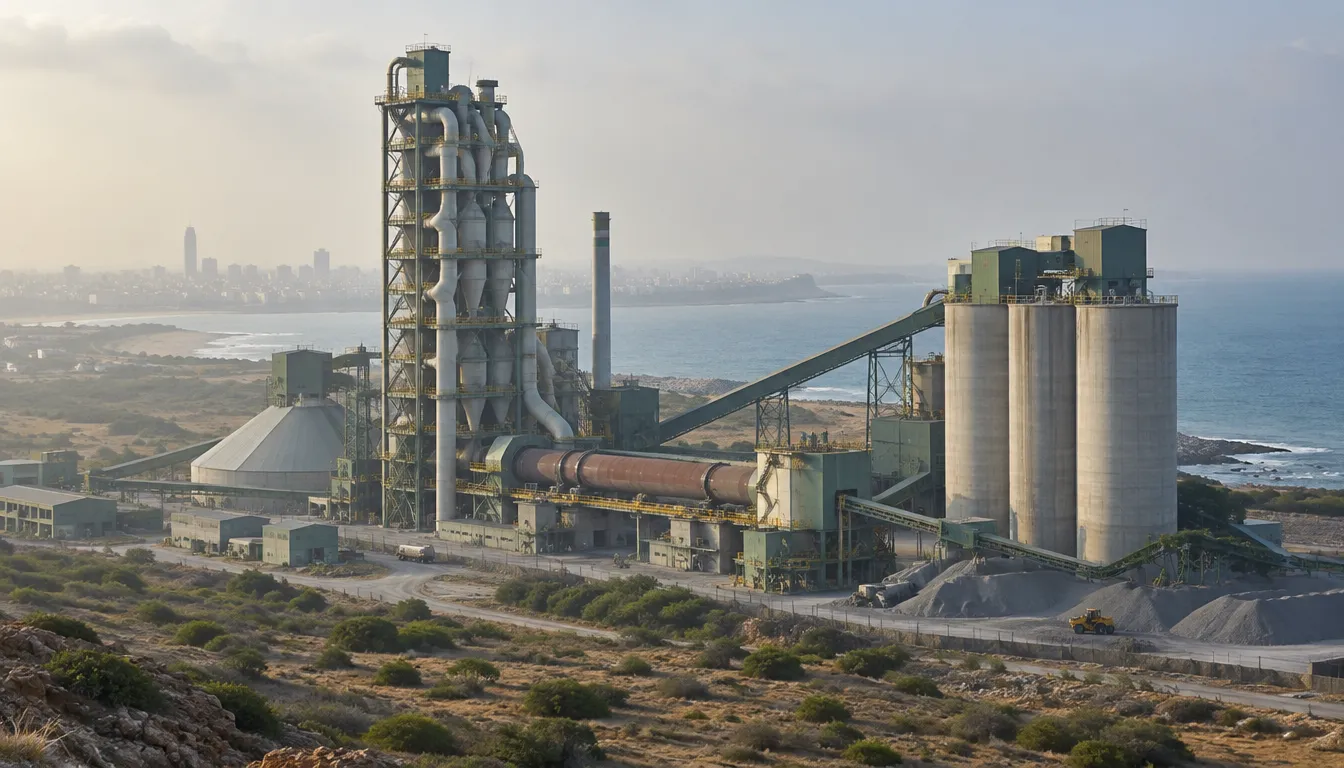
Producers in Senegal include Dangote Cement, Vicat’s Sococim Industries and Ciments du Sahel. US Geological Survey data for 2019 listed three plants, at Pout, Rufisque and Kirene. Their estimated combined capacity was about 7.4 million tonnes a year. In December 2020, Ciments du Sahel began building a third line at Kirene. The line would double that site’s output to 6 Mt a year. New capacity adds to the emissions the roadmap now has to address.
Other regions are also building frameworks for cement decarbonisation. Cement is a hard-to-abate sector because kiln fuel and the chemical process of making clinker both emit CO2. In Europe, industry body Cement Europe has reviewed delivery of the EU Cement Action Plan. Investors are also funding new capacity, such as a low-carbon cement plant in Latvia backed by an EU grant. The Senegalese roadmap gives producers and exporters a single national reference for the cement decarbonisation standards that will follow. The ministry’s announcement gives them a clear starting point for planning.
