


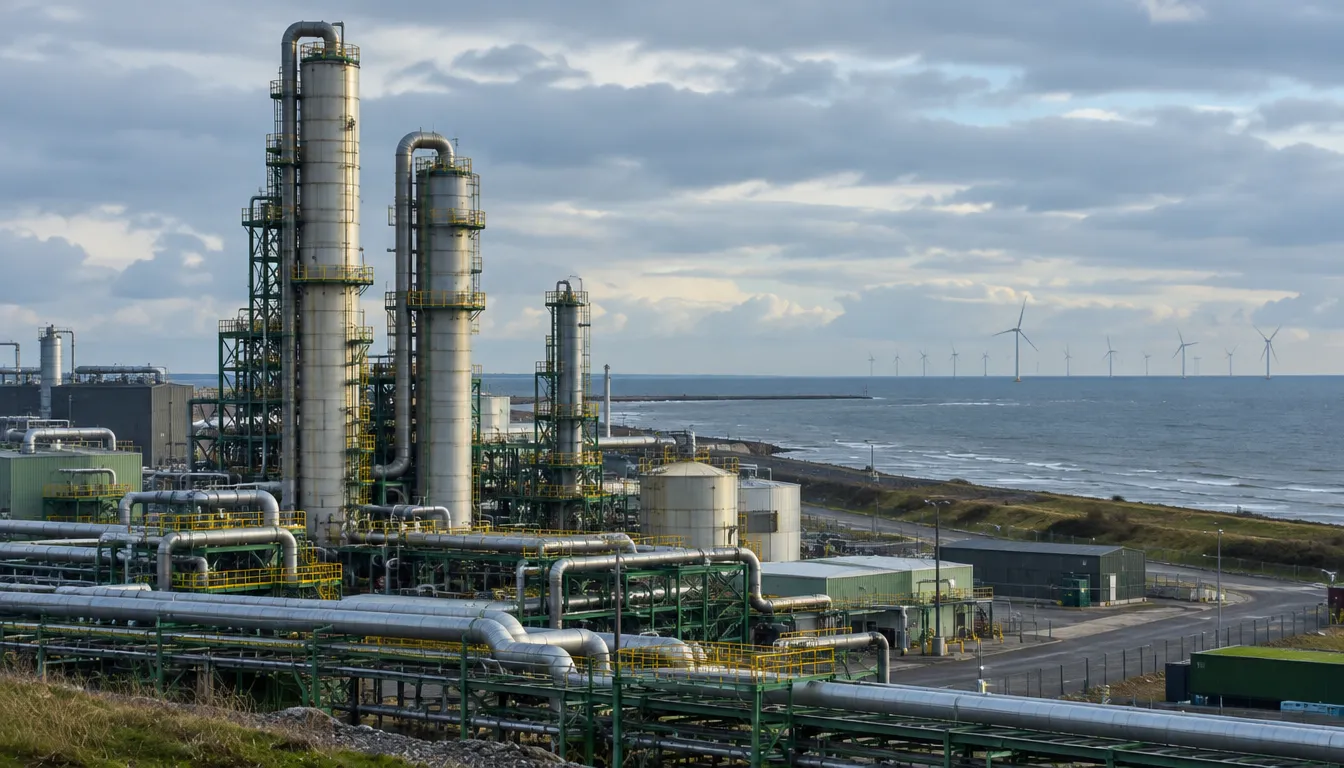
UK ministers told the CCSA annual conference that taxpayer carbon capture support will shrink, as BOC withdrew interest in the Northern Endurance Partnership and fewer industrial customers remain for UK storage.
The UK government told the Carbon Capture and Storage Association (CCSA) annual conference on 13 October that the young industry should expect less taxpayer money in future. Ministers framed the change as a response to tight public finances. The signal is a policy direction and not a formal decision, and no cut figure has been given for carbon capture support.
What ministers said
Martin McCluskey, a junior minister at the Department for Energy and Net Zero, said the government supports the industry but faces a “challenging fiscal environment” and must meet its fiscal rules. He said the next phase of the carbon capture, utilisation and storage (CCUS) programme will involve “difficult decisions on funding”. He warned of decisions on priorities, sequencing and pace, and said progress “will not always happen everywhere at once”.
Stefanie Murphy, the department’s industrial carbon capture lead, was asked whether the government can no longer afford past levels of support. She said yes and pointed to “fiscal realities”. She said tackling the cost of living is the top priority, with growth and other demands competing for money. She urged the industry to cut costs and to show job creation and regeneration benefits in deprived areas.
Press reports cited in coverage of the conference say the government wants to raise military spending to match NATO allies. Those reports suggest emissions-reduction funding, including subsidies for carbon capture and heat pumps, could be squeezed as a result.
Industry and adviser reaction
Olivia Powis, CCSA chief executive, opened the conference. She described carbon capture workers in Teesside, Hartlepool and north Wales as “what reindustrialisation looks like”. She warned that momentum “is not inevitable” and that investors would go elsewhere if commitments weakened. The UK, she said, could not afford to lose its leading position as delivery begins.
Eoin Devane, acting director of net zero at the Climate Change Committee, said the government relies on carbon capture to meet its carbon budgets and the 2050 net zero target. He said it has “insufficient plans” and faces “significant risks” of failure.
A conference panel discussed how the sector could reach financial independence. Cristel Lambton, technical and operations director at Eni’s CCUS arm, said the industry still needs funding and should not rush towards market independence. Tanisha Beebee, carbon capture lead at Harbour Energy, said the company is changing business models to reduce reliance on subsidy and cut costs.
Jack Richards of Spirit Energy, which is repurposing the Morecambe gas field for storage, said reliance on funding would ease with a higher carbon price that lifted demand. James Eyton, CCUS director at Viridor, called the timeline to independence “tricky”. He said carbon credit sales could be a “fundamental alternative revenue source”.
Customers drop away
Customer interest has also weakened. BOC, a Linde subsidiary, withdrew from the Northern Endurance Partnership offshore storage scheme in September 2025. BP also withdrew after cancelling a blue hydrogen project in the region. That leaves Net Zero Teesside, a gas-fired power plant, as the only remaining customer. Viridor remains interested in paying to capture and store its emissions.
Norway offers a contrast. Tim Heijn, managing director of Northern Lights, said the Norwegian government funded 80% of the project and “enabled” it. Northern Lights captures CO2 from European emitters, ships it as a liquid to Norway’s west coast and sends it through a 100km pipeline. It then injects the CO2 into a reservoir 2,600 metres below the seabed.
What the cost means for heavy industry
Carbon capture takes CO2 from concentrated sources, such as cement kiln exhaust, and moves it by pipeline, train or ship to underground storage. Experts see it as necessary for hard-to-decarbonise industries such as cement and chemicals, but limited and expensive. The Intergovernmental Panel on Climate Change (IPCC) describes it as one of the costliest options for cutting emissions.
For UK emitters, the practical question is who pays. Developers of projects such as the cement works carbon capture site that Heidelberg Materials is building face the same funding question. A smaller pot would push developers towards the carbon credit sales and green premiums that panellists described. Investors should watch the next phase of the CCUS programme for any figure on carbon capture support.
