


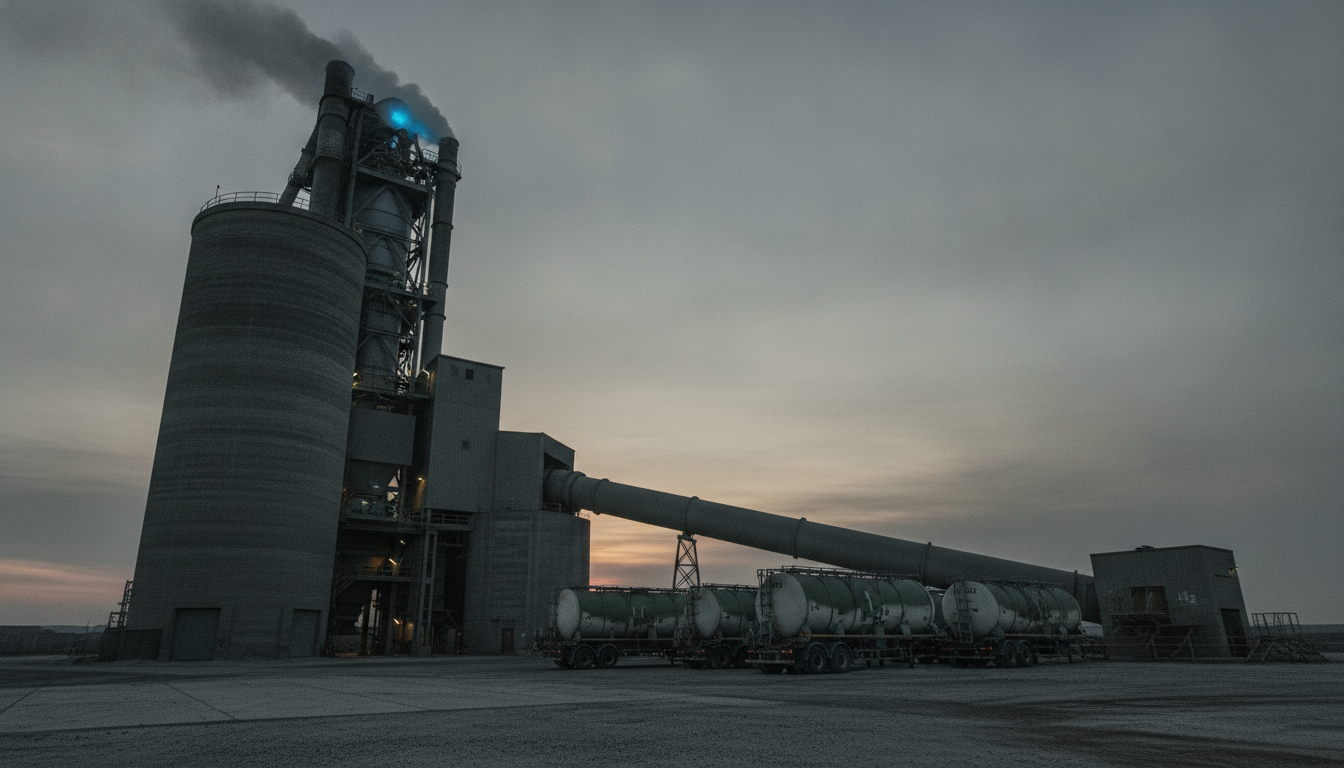
Rohrdorfer has co-fired hydrogen on the clinker kiln at its Gmunden works in Austria, the first trial of its kind at an Austrian cement plant, though the producer says the fuel still costs far too much.
Austrian cement producer Rohrdorfer has run the first large-scale hydrogen combustion test at an Austrian cement plant, co-firing the gas on the clinker kiln at its Gmunden site. The trial ran over two days in early July 2026 and covered part of the kiln’s heat output.
Clinker production needs temperatures of 1450°C, so cement kilns burn large volumes of fuel. Rohrdorfer has used alternative fuels at its plants for years to cut carbon dioxide emissions. Hydrogen burns without producing carbon dioxide, so kiln combustion emissions fall in proportion to the hydrogen share of the fuel mix.
Hydrogen combustion in kiln operations is technically demanding and has not been tested widely in the cement industry. Rohrdorfer’s Net Zero Emission team began preparatory work in mid-2023 and finished preparations in early July 2026. The gas proved fundamentally well suited to cement clinker production during the test, the company said.
Alternative fuels, mostly processed waste and biomass, already displace a large share of fossil fuel in European kilns. Hydrogen behaves differently. It burns hotter and faster than the solid fuels kilns are designed around, which changes flame shape and heat transfer in the burning zone. A full-scale trial answers that operational question in a way a laboratory rig cannot.
Supply came by road
Linde delivered the hydrogen by truck trailer and built a mobile gas unloading station specifically for the trial. That detail matters. Few cement works sit near hydrogen pipelines, so trailer delivery is the only practical route to a kiln trial at most European sites today, and it caps the volume any single test can burn.
Rohrdorfer did not give the hydrogen share of the fuel mix during the trial, describing it only as part of the kiln’s heat output. Nor did it put a figure on the carbon dioxide avoided over the two days. The company framed the exercise as gathering its own operational experience with a new energy source.
Cost decides the timing
“With this trial, we want to demonstrate that the use of so-called green H2 is a potential decarbonised alternative in the fuel mix of the future,” said Florian Wesenauer, project manager for the hydrogen trial at Rohrdorfer. “However, economic viability is not yet foreseeable; the costs for this H2 are currently still many times too high.”
When hydrogen prices fall to a competitive level depends on many factors and cannot be predicted, the company said. “Thanks to the test, however, we are well prepared and could begin the transition as soon as conditions allow,” Wesenauer said.
Fuel switching reaches only the combustion share of a cement plant’s emissions. The carbon dioxide released when limestone is calcined stays in the process whatever burns in the kiln, which is why operators pair fuel change with carbon capture in their long-range plans. Rohrdorfer now holds operating data at full kiln scale, ready for the day hydrogen becomes affordable. What remains is a price problem.
