


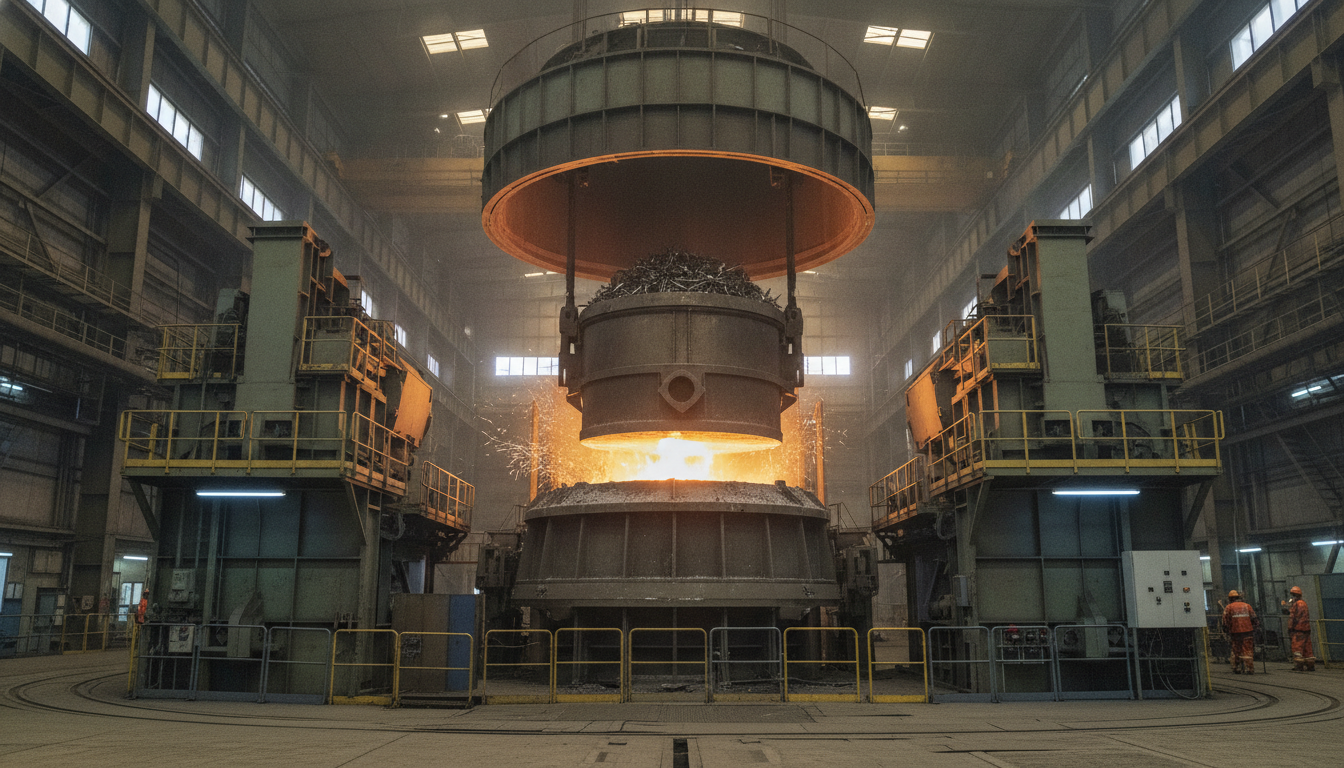
Japan’s trade ministry has asked for JPY 1.26 trillion in its fiscal 2027 budget request for green transformation, more than double this year’s allocation, with electric arc furnace conversion and green steel procurement in the frame.
Japan’s Ministry of Economy, Trade and Industry has requested JPY 1.26 trillion ($7.88 billion) for green transformation measures in its fiscal year 2027 budget proposal. The figure is more than double the JPY 605 billion ($3.79 billion) allocated in the initial fiscal year 2026 budget.
METI’s overall request, covering its general and special accounts, comes to JPY 7.79 trillion ($48.76 billion). The proposed allocations remain subject to approval during Japan’s budget negotiations, so the number is a request rather than a commitment.
Electric arc furnaces stay the priority
For steel, METI plans to continue supporting capital-intensive projects that convert blast furnace production to large electric arc furnaces. The support sits under its programme for energy and manufacturing-process transformation in hard-to-abate industries, which also covers chemicals, cement, and pulp and paper. The scheme assists investments that cut emissions while holding industrial competitiveness.
Government support has already carried EAF conversion at scale. Nippon Steel’s JPY 868.7 billion ($5.44 billion) investment covers three furnaces with a combined annual capacity of roughly 2.9 million tonnes.
Converting integrated steelmaking to electric arc furnaces changes the emissions profile and the raw material problem together. An EAF running on scrap avoids the coke and iron ore reduction step that generates most of the carbon dioxide in blast furnace steelmaking. It then needs scrap clean enough for the grades Japanese mills sell into automotive and construction markets, which is why scrap quality sits alongside furnace capital in the ministry’s plan.
Procurement to build the demand side
Alongside production-side support, the government intends to accelerate initial demand for green steel, particularly through its use in public infrastructure projects. METI and the Ministry of Land, Infrastructure, Transport and Tourism have launched trial projects involving lower-emission steel products such as sheet piles and bridge plates. The trials will assess their circulation, carbon footprints and green transformation value ahead of broader adoption in public works from 2030 onward.
Japan is targeting a domestic and overseas market for at least three million tonnes of high-quality green steel a year by the early 2030s. That rests on large-scale EAF investment, hydrogen-based steelmaking technologies, greater availability of high-grade scrap and public procurement.
The three million tonne target and the 2.9 million tonnes of Nippon Steel capacity sit close together, which places most of the stated ambition inside one company’s conversion programme. Widening the base means either more conversions or a scrap supply good enough to lift output grades at existing electric furnaces.
For buyers, the procurement trials carry more weight than the budget line. A public works specification that prices carbon footprint creates the offtake an EAF conversion needs to earn back its capital, and 2030 is when that specification is meant to apply at scale. Until then the budget request is a statement of intent that still has to survive Japan’s budget negotiations.
