


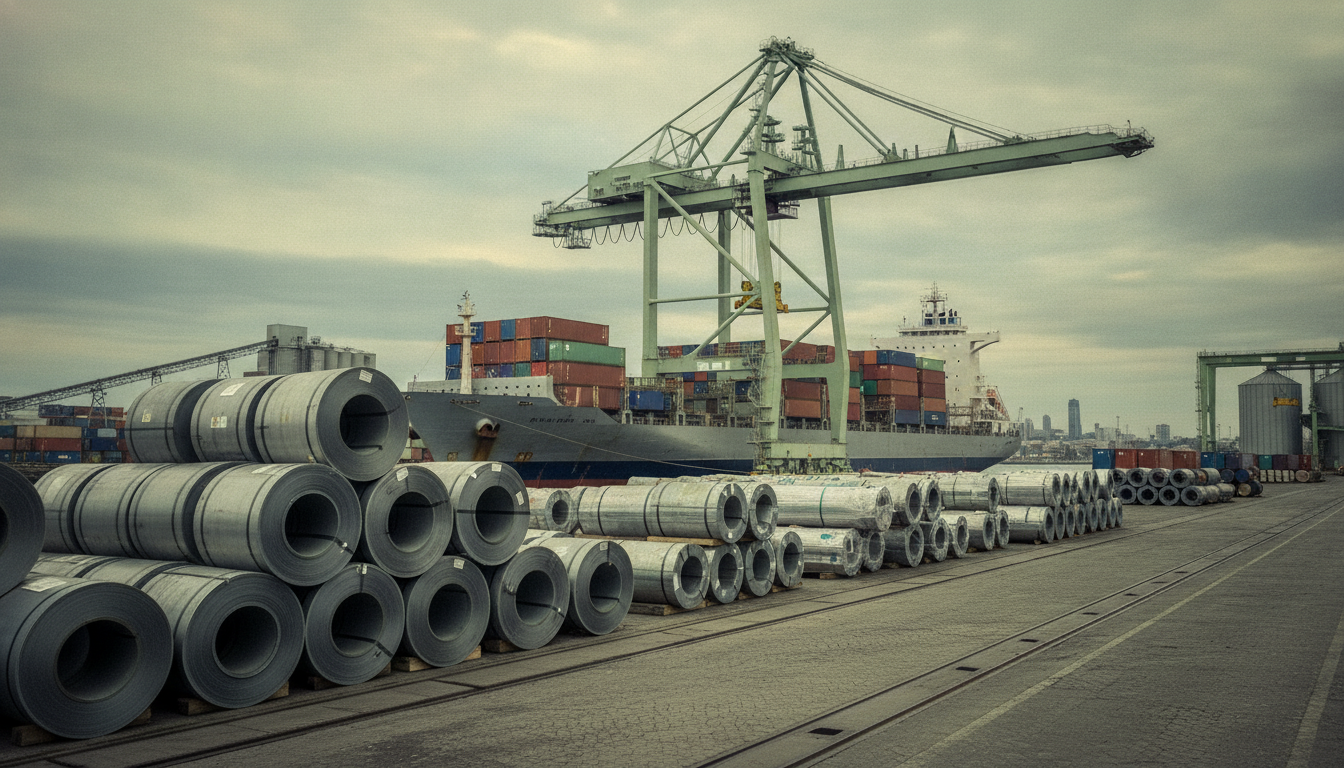
The European Commission has published verification and accreditation guidance for the carbon border adjustment mechanism, alongside amended default emissions values covering steel, aluminium, cement, fertilisers, hydrogen and electricity.
The European Commission published guidelines on 24 August for the officials responsible for making the Carbon Border Adjustment Mechanism (CBAM) work as intended. The guidance is written for CBAM verifiers, who check that declarations made by producers subject to the levy follow the rules.
It also sets out information for the national bodies responsible for accrediting and supervising those verifiers. The Commission published an overview of the accreditation bodies and their remits on 24 July.
A summer of CBAM paperwork
The verification guidance closes a run of documents issued over August. On 21 August the Commission shared a user’s manual for the register through which CBAM declarations must be submitted. On 14 August it issued a raft of documents for producers based in third countries, the parties directly affected by the mechanism.
That set included guidelines for each sector covered by CBAM: aluminium, steel and iron, hydrogen, cement, fertilisers and electricity.
Sector guidance carries weight because the emissions boundary differs by product. Steel and iron bring precursor emissions from upstream inputs, cement carries the carbon dioxide released during calcination, and hydrogen depends on the production route. Each document sets out what a producer in that sector has to measure and report.
Default values carry the cost
The Commission also used the summer period to publish an amended version of the default values used to determine the emissions attributed to goods for which no verified actual data is available.
Those values decide the carbon cost on a large share of covered imports. An exporter that supplies verified installation-level emissions data pays on its own figures. An exporter that does not pays on the default. The level at which the Commission sets each default therefore fixes the effective tariff for everyone who cannot or will not report.
The verifier guidance bears on the same question from the other direction. Verified actual data is worth submitting only if the verification behind it is accepted, and acceptance rests on verifiers working to a common method with national accreditation bodies supervising them consistently across member states.
The amended values come with an accompanying spreadsheet. Importers whose suppliers report actual emissions are unaffected by the revision. Those relying on defaults should reprice, since the change applies to the figure their liability is calculated from.
For EU importers, the task now is working out which suppliers can produce verified data and which will fall to defaults, then pricing that gap into contracts. The register manual sets out how a declaration is filed. The amended defaults set out what it costs when the data does not arrive.
