


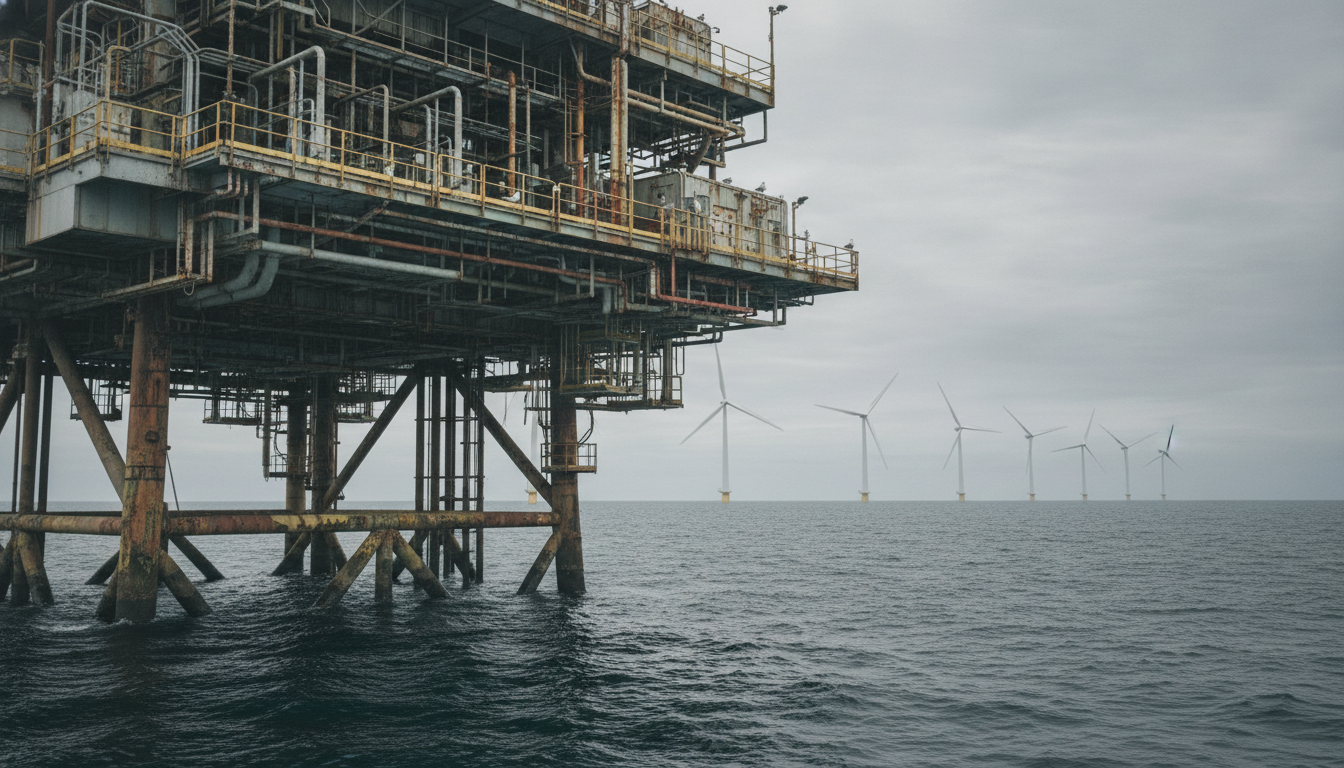
Durham University researchers put the hydrogen storage potential of depleted North Sea oil and gas fields at 3,659 terawatt-hours, enough to take conventional gas power stations off the British grid by 2040.
Depleted oil and gas fields in the North Sea could hold 3,659 terawatt-hours of hydrogen, more than seven years of projected UK electricity demand in 2040, according to Durham University researchers. The underlying study is published in the journal Applied Energy.
Professor Stuart Jones, Professor Chris Groves and Associate Professor in Practice Dr Andrew Crossland set out the findings. Using the depleted fields for hydrogen storage could take conventional gas power stations off the grid altogether by 2040, they said.
What the model tested
The team built a digital twin of Britain’s future electricity system and its geological storage, working with PhD researchers Zongtai Zhang and Joseph Brown. Instead of annual averages, they modelled supply and demand in half-hourly detail, capturing real weather patterns and the coming growth of electric vehicles, heat pumps and data centres.
Three futures came out differently. With more renewables and no additional hydrogen, the grid still leaned on gas through windless winter weeks. In a low-storage case using only planned sites, hydrogen stores filled to capacity, which stopped further surplus renewable electricity being converted into hydrogen over the summer. Only the high-storage case, adding depleted North Sea fields, removed the need for conventional gas power stations entirely by 2040. Gas fell to 1% of generation by 2030 across all scenarios.
Salt caverns are not enough
Current UK plans for hydrogen storage centre almost entirely on salt caverns, artificial voids dissolved out of thick underground salt layers, mainly in Cheshire and East Yorkshire. Britain does not have enough of them to meet long-term hydrogen storage needs, the researchers said. Only one North Sea field, Rough, is currently being developed for hydrogen.
Depleted fields hold gas in porous rock beneath an impermeable cap, and that structure remains after production ends. Many fields are still connected to pipelines and offshore facilities. The team assessed fields across the North Sea and selected candidates on geology, drawing on earlier academic and industry work covering cap rock quality and how much hydrogen would seep away in storage.
The industrial case
For heavy industry the relevant figure is seasonal volume. Hydrogen at this scale supplies industries that are hard to electrify or reliant on international supply chains, including fertiliser, steel, cement and glass, the researchers said. All of them need intense, high-temperature heat. A hydrogen flame delivers concentrated heat directly to industrial processes, replacing coal or natural gas in furnaces, kilns and blast furnaces.
Siting has commercial weight. Hydrogen made close to where offshore wind lands, and stored in fields served by existing infrastructure, would put production and storage near the coastal communities affected by the decline of North Sea oil and gas, drawing on similar skills and expertise. The researchers also argued that Britain’s wind resource and storage potential across the North and Irish seas give it the makings of a hydrogen exporter to Europe.
The infrastructure decisions that determine whether depleted fields are repurposed for hydrogen or decommissioned are being made now, the researchers said. Once a field is decommissioned its wells are plugged and the option closes. For industrial buyers weighing hydrogen supply into the 2030s, that timing is the part of the study that bears on procurement.
