


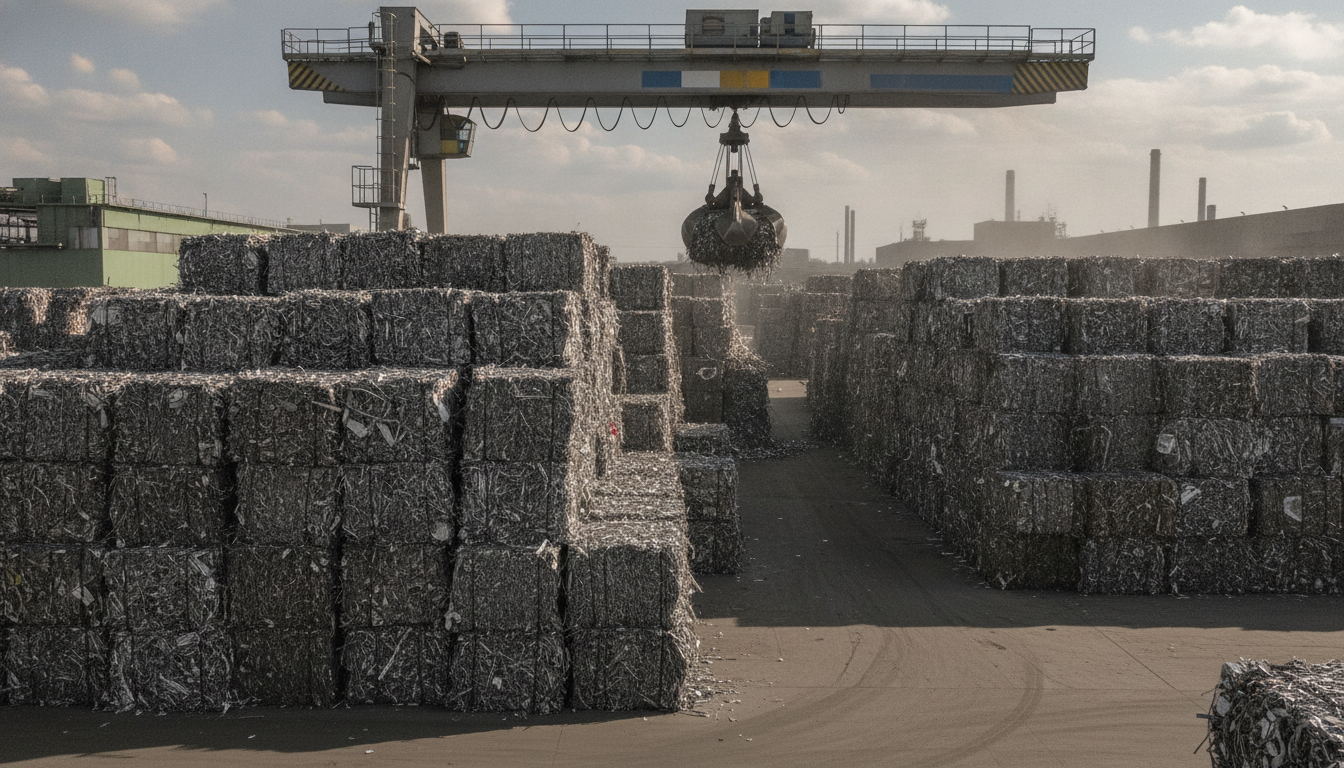
BMW’s Car2Car consortium has shown that additional sorting can strip copper from end-of-life vehicle scrap well enough to make flat steel for cars, with more than 100,000 series parts already built and installed.
High-quality material loops are technically feasible in the automotive industry, and copper-bearing impurities in steel scrap can be reduced notably, BMW said after completing its Car2Car research project with partners, EUROMETAL reported on 27 August.
The project focused on steel, aluminium and copper, and also considered other materials including glass. BMW’s consortium included Scholz Recycling, thyssenkrupp Steel Europe and Salzgitter Mannesmann Forschung, alongside academic partners such as TU Bergakademie Freiberg.
Copper is the constraint
Copper-bearing impurities from cables, connectors and other components have held back the recycling of end-of-life vehicle scrap into high-quality automotive steels. Copper does not separate from iron in the melt, and it causes surface cracking during hot rolling, so mills cap the copper content of the scrap they will accept for flat products.
The project showed that an additional processing step substantially improves scrap quality, BMW said. Copper contamination was reduced in a targeted manner by sorting the steel scrap. That gives high-quality steel scrap as the starting material for new flat steel meeting the requirements of modern automotive applications. A patent application has been filed for the process.
Tested in series production
The steel coils produced using the method were integrated into industrial production following material and quality testing.
“In the field test at BMW Group Plant Leipzig, more than 100,000 series parts were produced using this steel and installed in vehicles – making the project’s results tangible,” said Hilke Schaer, Car2Car project manager at BMW Group.
BMW said additional processing and sorting steps can significantly increase the potential of high-quality material loops. The company also said scalable process chains, additional infrastructure and viable business models are still needed for large-scale industrial implementation.
What it means for steel supply
The result bears on the scrap question sitting under every electric arc furnace conversion in Europe. EAF steelmaking cuts emissions sharply against the blast furnace route, and it depends on scrap clean enough for the grade being made. Automotive flat steel is among the most demanding grades, and end-of-life vehicles are among the dirtiest scrap streams for copper.
A sorting step that turns shredded vehicle scrap into automotive-grade feed widens the supply of high-grade scrap without new mining or new iron reduction. It also gives carmakers a closed loop they can document, which matters for Scope 3 reporting on purchased materials.
The remaining work is commercial. Someone has to build the sorting capacity, and the price premium clean scrap earns has to cover it. BMW has the process and a patent application. The infrastructure and the business model are still open.
