


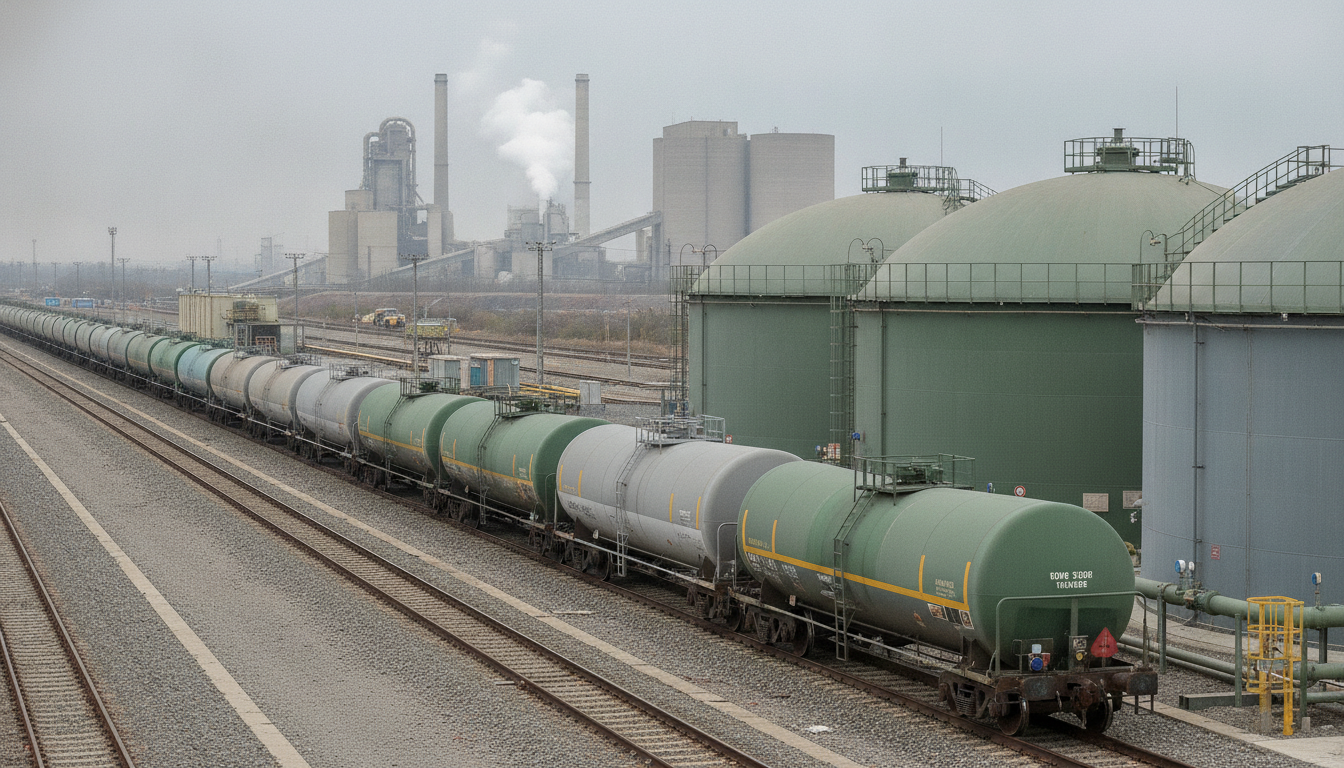
Developers are turning to rail to move captured carbon dioxide as pipeline projects face delays, with Frontier Infrastructure building a Wyoming terminal able to handle 500,000 tonnes of CO2 a year.
Carbon capture developers are turning to rail to move captured carbon dioxide as pipeline projects stall, with US infrastructure firm Frontier Infrastructure Holdings advancing a rail-based platform, Carbon Herald reported. Rail uses existing track and avoids the right-of-way disputes that have slowed dedicated CO2 pipelines in several US states.
Frontier combines carbon capture, rail transport, underground storage and carbon credits into one system. Its Granger Carbon Terminal in south-western Wyoming is designed as a large-scale rail-to-sequestration offloading facility, able to handle up to 500,000 tonnes of CO2 a year. The captured gas is bound for permanent storage at Frontier’s Sweetwater hub, which spans nearly 100,000 acres.
Rail cuts greenhouse gas emissions by up to 75% against road haulage and draws on infrastructure that already reaches most emitters. In hard-to-abate sectors such as cement, steel and gas processing, an estimated 94% of facilities sit within a mile of a railroad. The rail industry has moved liquefied CO2 safely for decades, around 1.2 million tonnes a year.
Cost is the main draw. For volumes below about 2 million tonnes of CO2 a year, rail is widely seen as cheaper than building a dedicated pipeline, and most capture projects likely over the next decade fall within that range. That makes rail a practical bridge while larger pipeline and shipping networks develop.
“For ethanol producers and other industrial emitters, access to carbon markets depends on more than capture alone,” said Robby Rockey, President and Co-CEO of Frontier. “It requires a fully integrated chain from transportation and storage through crediting and sale.” Frontier, backed by Tailwater Capital, is developing low-carbon infrastructure across the Mountain West and Texas.
Rail is not a full substitute for pipelines at the largest scale, where dedicated networks still win on cost per tonne. Its value is in connecting scattered mid-sized emitters to storage without waiting years for permits. That flexibility matters most for cement, ethanol and gas plants that cannot justify their own pipeline spur.
For industrial emitters without a pipeline nearby, rail offers a route to storage and carbon revenue using assets already on the ground. The model’s reach will depend on terminal build-out, storage capacity and the price emitters can secure for verified removals.
