


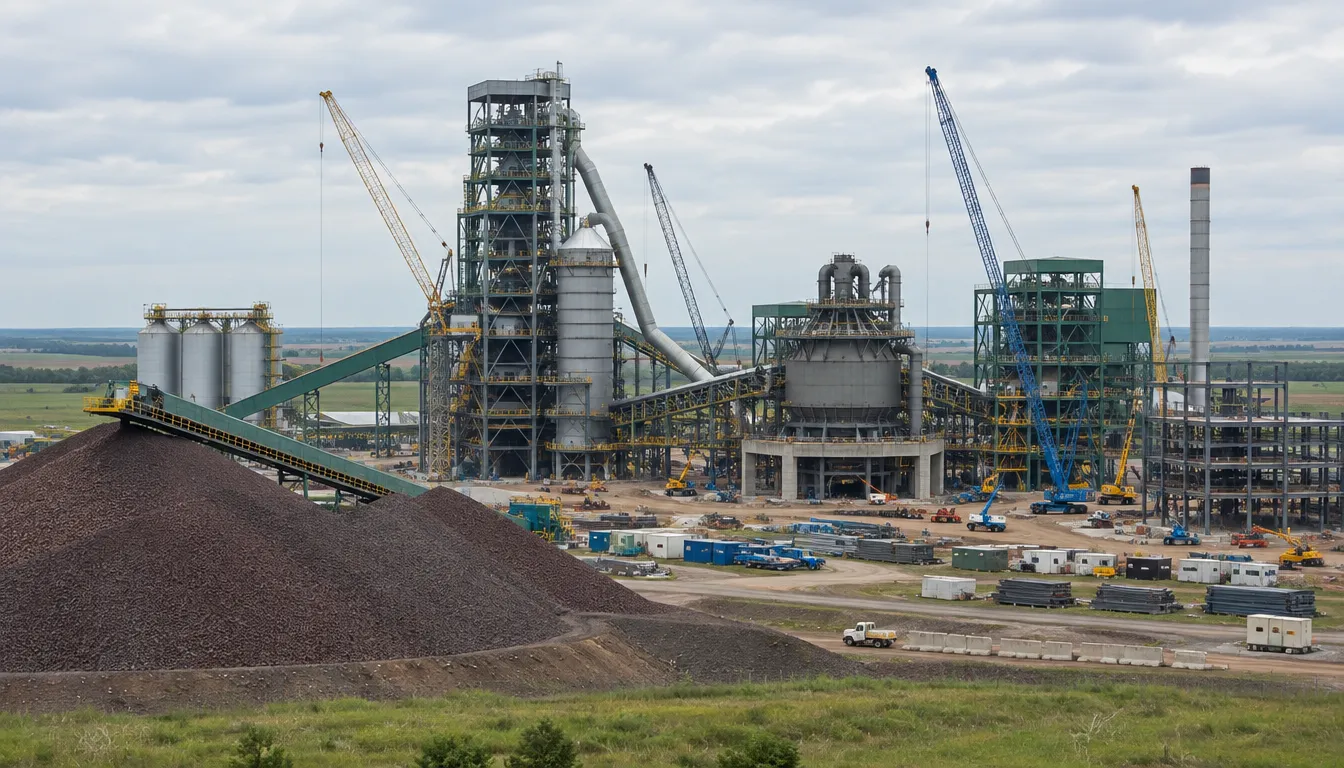
Mesabi Metallics has announced an $18bn plan, including a $15bn Iowa steel complex that will pair hot direct-reduced iron with electric arc furnaces and use ore from its new Minnesota mine.
Mesabi Metallics announced on 28 September an $18 billion investment to build a fully integrated steel company. The plan links its iron ore mine in Minnesota with a new Iowa steel complex. The company said it will spend $15 billion on the Iowa facility, on top of $3 billion to complete the mine on the Mesabi Iron Range. Essar Group sponsors the project, which Mesabi calls the largest single investment in a steel complex in US history.
The announcement took place at the White House. Mesabi says the Iowa steel complex will complete a supply chain that is mined, melted and poured in the United States, from the Minnesota Iron Range to finished steel in Iowa. The company has not said why it chose Iowa over other sites.
Mine and pellets in Minnesota
The mine at Nashwauk, Minnesota, is the first new iron ore mine built in the United States in 50 years, according to Mesabi. It will produce direct-reduction-grade pellets engineered for modern electric arc furnace steelmaking. More than 1,500 construction workers are on site, alongside over 200 full-time employees. The company expects 350 full-time jobs once the mine is fully operational, and says the pellets will feed the Iowa steel complex directly.
That link between mine and mill is the core of the plan. Steel producers in the United States rely mainly on two routes: integrated blast furnace mills, and electric arc furnaces that recycle scrap and imported iron. Mesabi says its complex builds on the strengths of both, by pairing domestic ore with a modern electric arc furnace plant.
How the Iowa steel complex will make steel
The Iowa steel complex will use hot direct-reduced iron (DRI) and electric arc furnace (EAF) technology. In direct reduction, the process removes oxygen from the ore at temperatures below its melting point and leaves solid metallic iron. Mesabi says feeding that iron into the furnace while it is still hot cuts the energy needed to melt it. The furnaces will also take scrap steel alongside the freshly reduced iron.
The company says this route will significantly lower energy use and reduce emissions compared with traditional blast furnaces. Its announcement gives no emissions figures and no detail on the fuel for the DRI process, so the scale of the saving is not yet public. Other producers are also moving towards electric arc furnace projects, and Japan has made EAF steel a priority in its green transformation budget request.
Jobs and economic claims
Mesabi says the project will create over 8,000 permanent and construction jobs across Minnesota and Iowa. At the Iowa steel complex, it expects more than 6,000 jobs during construction and at least 1,750 full-time roles once the plant operates. The company also estimates $95 billion in total economic output during construction and the first 10 years of full operations. These are company projections, and the announcement does not set out the assumptions behind them.
Joe Broking, chief executive of Mesabi Metallics, said the project combines “the highest quality direct-reduction grade iron ore pellet from Minnesota’s Iron Range with the most advanced DRI to EAF steelmaking technology in Iowa”. Rewant Ruia, chair of Mesabi, said: “With the new steel complex in Iowa, we will complete the fully integrated American supply chain, from mine to mill.”
Iowa Governor Kim Reynolds also welcomed the plan. “Together, we will produce a reliable supply of high-quality, American-made steel that strengthens the nation’s industrial base,” she said.
What to watch next
The emissions case for the Iowa steel complex will depend on details still to come. Buyers and investors will look for the DRI fuel, the source of the electricity for the furnaces, the scrap share in the charge and a construction timetable. Hydrogen could cut emissions further, but the company has not named a supply or committed to it.
For industrial decarbonisation, the announcement adds a large direct-reduction and arc furnace project to a US steel sector that still depends heavily on blast furnaces. A firm investment decision, published emissions data and confirmed offtake will show how far the plan lowers the carbon footprint of American steel.
