


Mission Possible Partnership has published guardrails for mass balance claims, aiming to help buyers judge which accounting systems for low-carbon steel, cement and chemicals deserve their trust.
Mission Possible Partnership has published a framework for assessing mass balance claims, aiming to stop the accounting method used across steel, cement, chemicals, aluminium and aviation supply chains from undermining trust in low-emission products.
The report, titled “Principles and Guardrails for Credible Mass Balance Claims”, sets out what MPP calls a due-diligence tool for buyers, producers and standard setters to judge whether a given mass balance system deserves confidence. Section 6 of the document lays out an assessment method for identifying where the approach builds genuine trust and where it risks weakening it instead.
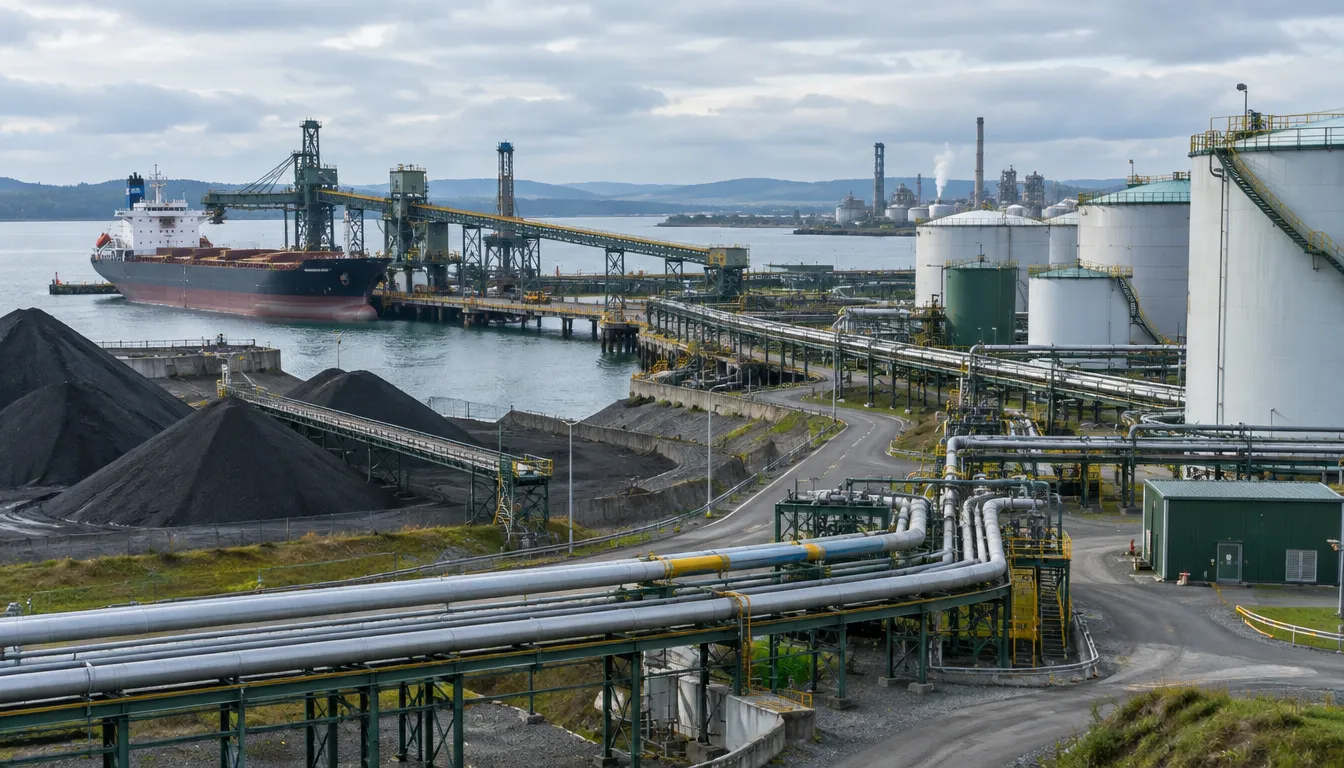
Mass balance claims arise because clean fuels and low-carbon materials rarely move directly from producer to buyer. Instead they typically share pipelines, ports and processing plants with conventional products, passing through several intermediaries before reaching automotive, construction or shipping customers. Mass balance accounting tracks the low-emission content through that shared infrastructure on paper, allocating credit to a buyer even though the physical molecules or tonnes they receive may be indistinguishable from the conventional product running through the same system.
That flexibility is also the source of the problem MPP is trying to address. Because mass balance systems can be designed in different ways, with different rules for how credits are allocated, tracked and verified, the credibility of a claim depends entirely on how the underlying system is built. A buyer relying on mass balance claims for green hydrogen, recycled feedstock or low-carbon steel has had few consistent ways to judge whether a given system meets a basic bar for trust, which is the gap the new guardrails are meant to fill.
MPP is an independent non-profit that has worked since 2019 to accelerate the transition in six energy-intensive sectors: aluminium, aviation, cement, chemicals, shipping and steel. Those sectors together account for close to 25% of global greenhouse gas emissions, and MPP has built much of its work around getting buyers, financiers and policymakers to coordinate demand for lower-carbon versions of the same commodities.
Mass balance claims sit underneath a growing share of that demand-side work. Green ammonia buyers pooling their purchasing power, steelmakers selling certified low-carbon output into markets that still handle conventional metal, and chemicals producers blending recycled feedstock into existing plants all rely on some version of mass balance accounting to make their claims stand up. Without shared guardrails, buyers assessing competing supply offers have had no consistent way to compare one supplier’s mass balance claim against another’s.
The framework’s due-diligence tool is designed to be used directly by companies assessing a supplier’s claims, rather than only by auditors or certification bodies after the fact. That puts the burden of verification earlier in the purchasing process, closer to where sourcing decisions are actually made. It echoes a wider push towards standardising how supply chain claims are verified, including moves such as the GHG Protocol and ISO merging their corporate carbon accounting standards into a single global approach.
MPP has not said whether it plans to formally endorse specific mass balance systems against its own guardrails, or leave that assessment to the buyers and producers using the framework. For now, the document functions as a reference point rather than a certification scheme in its own right. MPP operates across North America, Brazil, Europe, the Middle East, North Africa, India and Asia-Pacific, giving the framework a reach that extends well beyond any single regulatory jurisdiction.
For supply chain managers already navigating mass balance claims across multiple suppliers and product lines, the framework offers a shared vocabulary for a question that has so far been answered differently by every scheme in use. Whether it becomes a genuine industry standard will depend on how many buyers and producers choose to apply it in practice, rather than treating it as one more voluntary document among many.
