


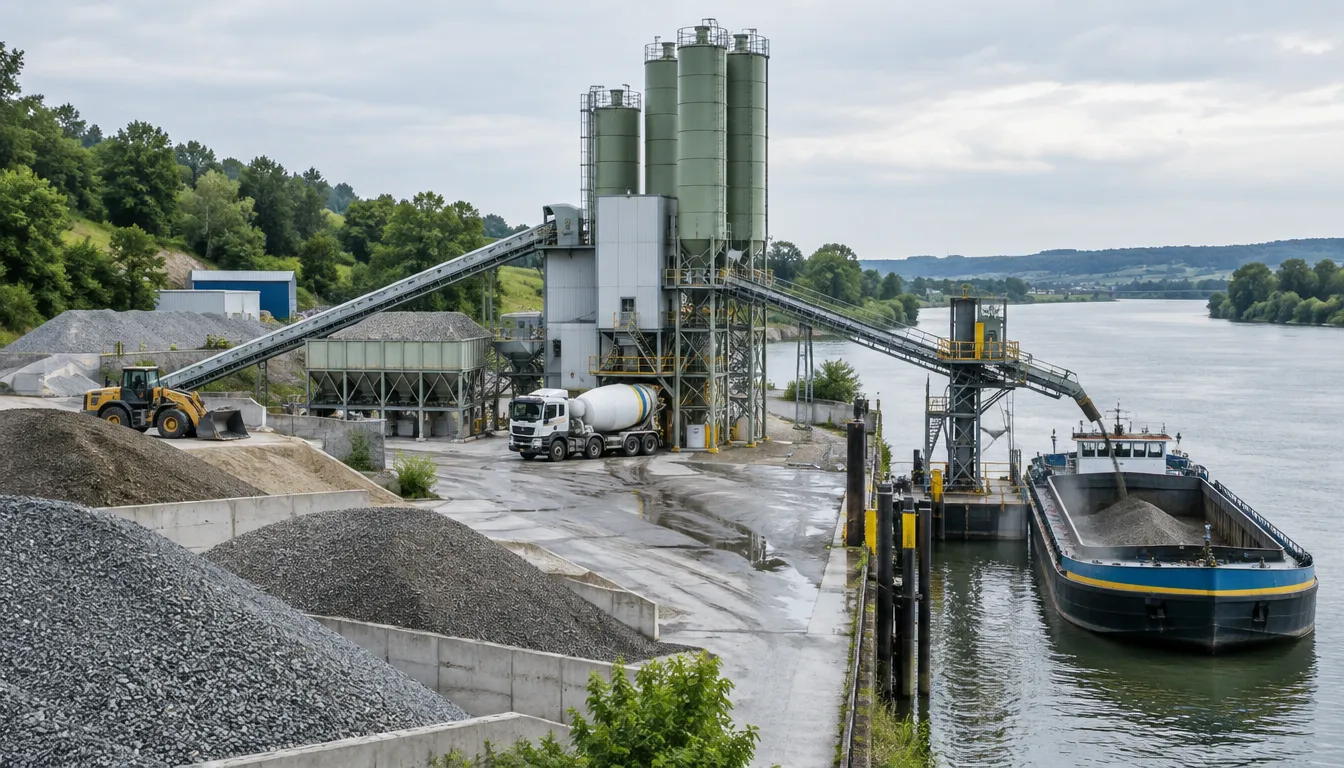
Heidelberg Materials UK has proven a zero concrete waste process at its Greenwich plant on the Thames, recovering aggregates for reuse and pairing concrete recycling with CarbonCure CO2-injection technology.
Heidelberg Materials UK said it has proven a zero concrete waste process at its Greenwich plant on the River Thames, using a new concrete recycling system that recovers aggregates and cementitious fines from returned concrete for reuse in new production.
The Victoria Deep Water site’s concrete recycling system also allows all of the water used to clean delivery trucks to be reused, cutting both material waste and water consumption at the plant. The company said the milestone reinforces Greenwich’s position as a circular construction materials supply hub serving central London’s construction sites, many of which are reached by barge from the site’s river frontage rather than by road.
The Greenwich plant supplies Heidelberg Materials’ lowest-carbon concrete range, which includes evoZero carbon-captured near-zero cement, evoBuild ground granulated blast furnace slag, limestone fines, natural pozzolans and calcined clay. It can also supply recycled crushed concrete aggregate to replace primary aggregate in ready-mixed concrete production, reducing demand for quarried material on projects across the capital and cutting the transport emissions tied to sourcing virgin aggregate from further afield.
The site is fitted with CarbonCure technology, which injects manufactured carbon dioxide into fresh concrete during mixing. The CO2 undergoes a chemical reaction and becomes permanently mineralised, making hydration more efficient and delivering stronger concrete while locking in the carbon even at end of life, when the concrete is eventually demolished or recycled through the same yard. The process cuts CO2 associated with concrete by around 7 to 11kg per cubic metre and allows cement content to be reduced by an average of 5% without losing strength or workability on site.
Returned concrete, the unused material that comes back to a plant in a mixer truck at the end of a pour, has traditionally been treated as waste destined for landfill or low-value fill. Recovering its aggregate and cementitious fines for reuse turns that leftover material back into a saleable product, cutting both the plant’s waste disposal costs and its demand for freshly quarried aggregate.
Barge access is a significant part of the Greenwich site’s case for lower-carbon logistics as well as lower-carbon materials. Moving aggregate and finished concrete by river rather than by lorry cuts road congestion and vehicle emissions around central London construction sites, an advantage the company has highlighted alongside the plant’s materials work.
Closing the loop on concrete recycling also has a commercial logic for ready-mixed producers operating in dense urban markets, where tipping fees for construction waste and haulage costs for imported aggregate have both risen in recent years. A plant that can recover and resell its own returned material has more control over input costs than one reliant entirely on quarried supply.
Heidelberg Materials UK’s earlier ready-mixed concrete trial first piloted CarbonCure technology to cut embodied carbon, and the Greenwich concrete recycling system extends that work into the aggregate and water side of production, closing a second loop alongside the carbon injection process already running at the site.
Greenwich also houses a concrete lab and Heidelberg Materials’ evoHub concrete training centre, giving contractors, consultants and engineers the chance to test lower-carbon concrete solutions before specifying them on live projects across London. The Greenwich work sits alongside the UK’s first cement works carbon capture site as part of the company’s wider UK decarbonisation programme, which spans both cement production and the concrete supply chain that depends on it.
For a sector where aggregate and cement supply chains are hard to decarbonise quickly, closing the loop on returned concrete and reused wash water offers a comparatively low-cost route to cutting waste and embodied carbon at existing plants, without waiting for new low-carbon cement chemistries to reach commercial scale across the wider market in the years ahead. Heidelberg Materials said it intends to apply lessons from the Greenwich concrete recycling system across other UK sites as its wider decarbonisation programme progresses.
