


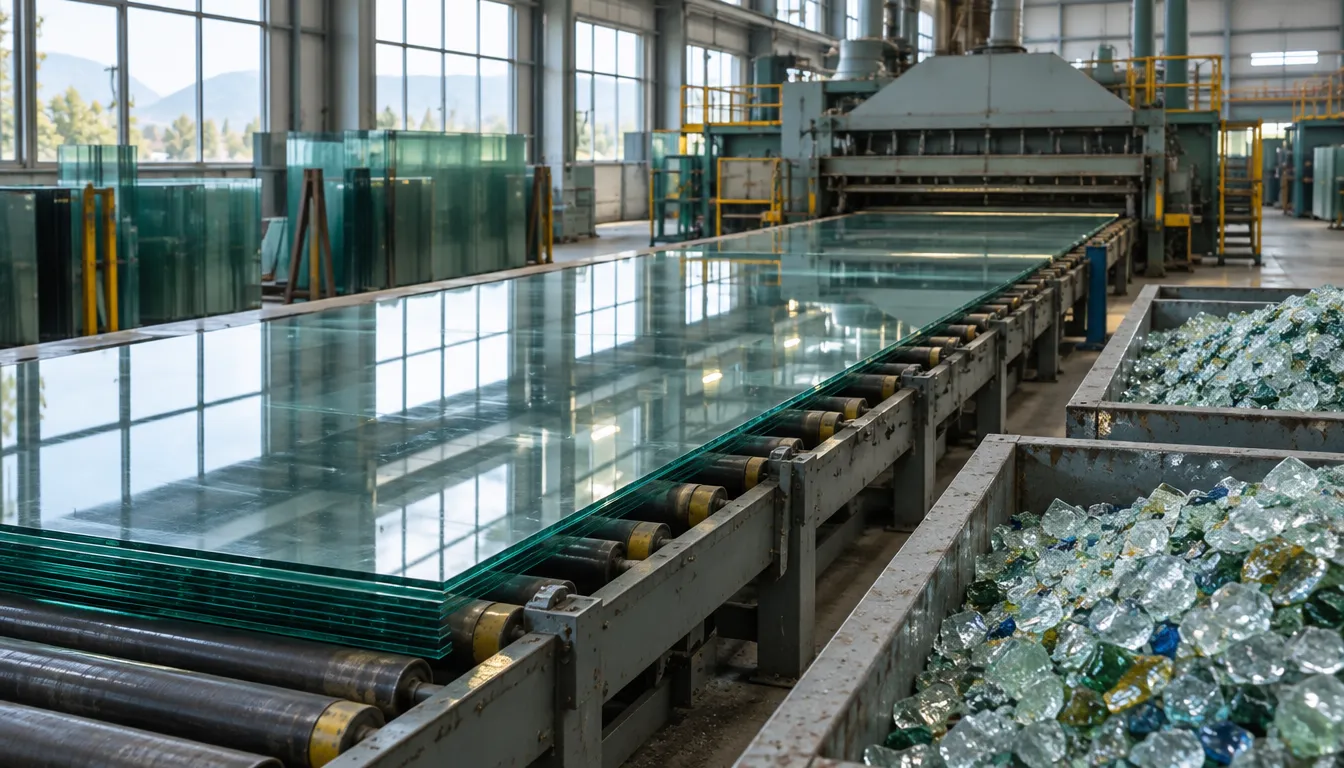
NSG Group has completed a float glass recycling trial at its Chiba Plant, reprocessing end-of-life laminated glass from a University of Tokyo building into new glass products.
NSG Group has completed a float glass recycling trial at its Chiba Plant in Ichihara City, in what it calls horizontal recycling, feeding waste glass from a University of Tokyo building back into new float glass. The waste glass was fed into the plant’s furnace in late August, after several months of collection and processing work with a Japanese industry partner.
The project was run with the Flat Glass Manufacturers Association of Japan (FGMAJ). NSG and FGMAJ collected 12mm-thick ceramic-printed tempered glass with safety film from the university building, which an intermediate processing company sorted and stripped of its safety film before it was fed into NSG’s float furnace. Removing the film and ceramic coating before the glass reaches the furnace is one of the main handling steps that makes building glass more difficult to recycle than simpler container glass.
Manufacturing trials and quality checks confirmed the recovered glass could be used as a recycled raw material without adverse effects on the production process under certain conditions, verifying that float glass can be made in Japan using post-consumer glass collected from the market rather than only from manufacturing offcuts. Glass that could not go back into float glass because of its safety film was diverted to make glass wool instead, so none of the recovered material was lost to landfill even where it fell short of float-glass specification.
Professor Tsuyoshi Seike, who chairs FGMAJ’s flat glass recycling and resource recovery subcommittee, said glass collected from the market varies widely in specification, creating challenges in sorting, collection and quality control that projects such as this one are designed to work through. That variability, driven by different coatings, laminations and thicknesses used across decades of building construction, is the main reason flat glass recycling has lagged behind the container glass sector.
Flat glass has historically been harder to recycle back into new flat glass than container glass, because laminated and coated building glass often carries films, coatings or ceramic prints that must be removed before the cullet can re-enter a float furnace. Container glass, by contrast, is typically a single material stream that can go straight from collection to furnace with far less pre-processing. Raising the share of recycled cullet in a furnace charge cuts the energy needed to melt raw materials, directly lowering emissions per tonne of glass produced, an issue also being addressed through initiatives such as the ResponsibleGlass sustainability standard for the sector.
As more buildings from the 1970s and 1980s reach demolition age, the volume of laminated and coated glass entering the waste stream is set to grow, making a proven route back into float glass production more commercially relevant. NSG’s Chiba trial gives the flat glass sector a working example of collecting post-consumer building glass and feeding it back into float production, rather than routing it only to lower-value uses such as aggregate or insulation feedstock.
Replicating float glass recycling at commercial scale would still depend on building reliable collection and sorting networks for demolition glass, something that does not yet exist in most markets the way container-glass collection does. NSG has not said whether it plans to extend the horizontal recycling approach to other plants, but the Chiba results give the company and FGMAJ a reference case to show demolition contractors and sorting operators what specification of recovered glass a float furnace can actually accept, and what proportion of a typical demolition glass stream might realistically qualify.
For architects, demolition contractors and glassmakers weighing circularity commitments, the float glass recycling method demonstrated at Chiba offers a route that keeps recovered building glass at its highest value, rather than downcycling it into glass wool by default. A wider rollout of float glass recycling would give the construction sector a materials loop that today largely runs in one direction, from new float glass into buildings and, eventually, into lower-value uses.
