


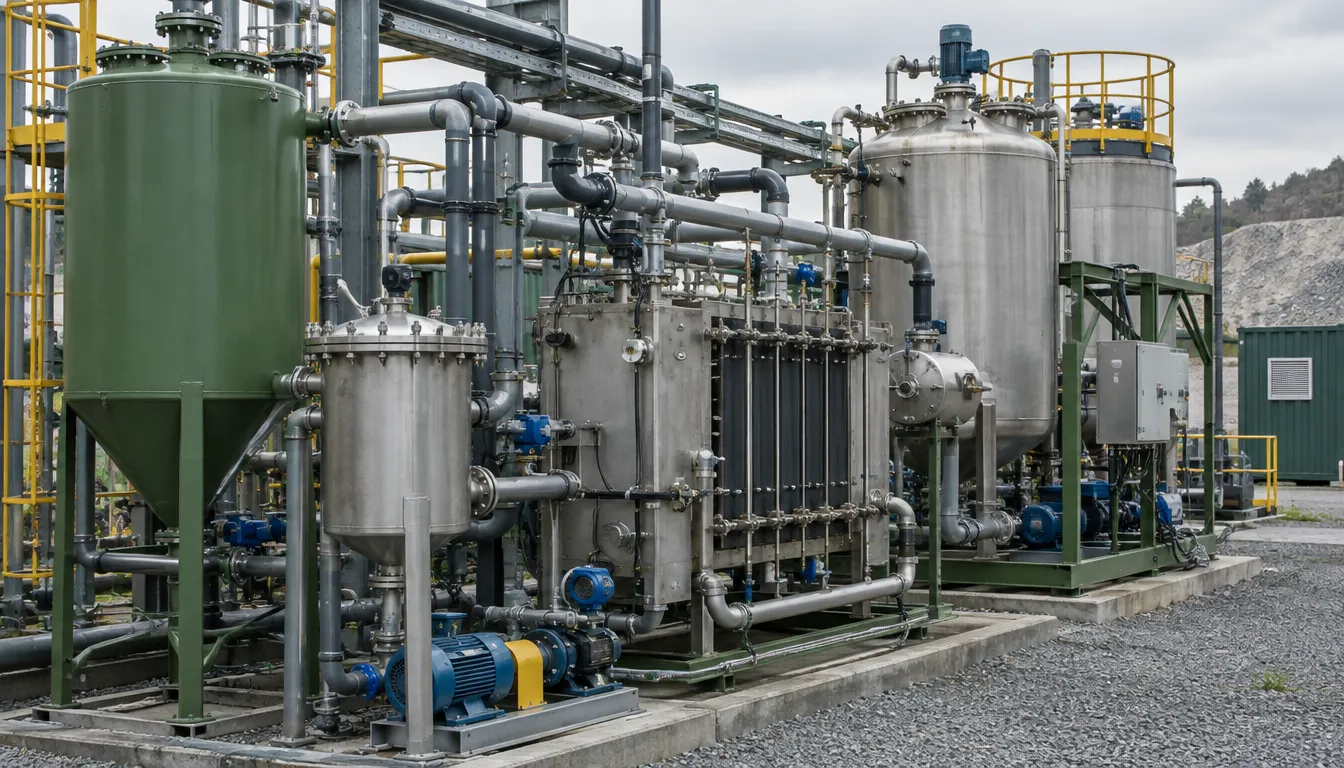
Calgary-based Cura has closed a $10 million USD funding round to expand its electrochemical low-carbon cement pilot with Grand Forks Concrete, a step toward commercial-scale production in Alberta.
Calgary-based cleantech company Cura has closed a $10 million USD ($14 million CAD) funding round on 17 September, its second tranche, to accelerate commercial development of its low-carbon cement technology near Taber, Alberta. The round was led by Zacua Ventures, with Sandpiper Ventures, Vantage Futures, Amplify Capital, the University of Calgary’s UCEED fund, the Mount Rundle Club and Sebastian Becker also participating. Zacua’s Juan Nieto joins Cura’s board of directors.
Cement is conventionally made by heating limestone in fossil-fuel kilns, a process that accounts for up to two thirds of the concrete industry’s emissions and around 7% of global emissions overall. Cura, founded in 2025, uses its Curalyte platform to run an electrochemical process on limestone instead, separating out CO2 during conversion rather than burning fuel to drive the reaction. The company says the method cuts emissions from cement production by 30% to 85%, depending on the energy source used to power the process.
The new capital funds three priorities: expanding Cura’s engineering and business development teams from 15 to 20 staff by the end of the year, building out its pilot plant with Taber-based precast manufacturer Grand Forks Concrete, and engineering a commercial demonstration facility at the same site. Chief executive Erin Bobicki said the 100-tonne-a-year pilot is expected to begin commissioning in the first quarter of 2027. “We’ve already started hiring. We’ve hired three positions as of late,” Bobicki said. “Mostly we’re hiring engineers and scientists. We have a number of folks we need on the electrochemical side developing our core IP.”
“Following on the successful demonstration of this pilot in 2027, our intention is to go to a commercial demonstration facility at about 30,000 tonnes of cement per year,” Bobicki said. Both projects will run on solar power from a nearby, Grand Forks-owned solar farm, which Bobicki said should let Cura reach the higher end of its emissions-reduction range. Bobicki described Grand Forks as keen “to not just get to the pilot, but to get to the commercial demonstration facility.”
Meeting industry cost benchmarks is central to Cura’s pitch. Bobicki said most conventional cement producers make the material for around $75 a tonne and sell it for about $150, and that Cura wants to get below that production cost without relying on carbon-pricing credits. “Our tech allows cement producers to make cement and manage the carbon for the same price they’ve always been making cement at, or less,” she said. The company’s Curalyte platform cuts the electrolysis energy the process needs, supporting that cost target.
Cura’s low-carbon cement approach sits alongside a wider set of routes investors are backing to cut cement emissions, from carbon capture retrofits on existing kilns to alternative low-carbon binders that substitute for some of the clinker in a standard cement mix. Electrochemical processing is a smaller, newer category within that field, and Cura’s Alberta pilot is among the first attempts to prove the approach can run at commercial cost rather than only in a laboratory setting.
Cura’s longer-term plan is to sell retrofit equipment directly to existing cement producers rather than build new plants of its own, an approach that targets the roughly one-million-tonne-a-year facilities that dominate the industry. “There’s four trillion in sunk assets in this industry,” Bobicki said. “We’re offering a retrofit solution to decarbonize existing operations with the same feedstock they have to make the product they already have, and to utilize existing assets.”
The raise adds to a run of funding and pilot activity in low-carbon cement this year, as producers and investors test routes to decarbonising a material that is difficult to replace at scale, including MCi Carbon’s field trial with Boral. Investors backing low-carbon cement start-ups are, in effect, betting on which route to commercial-scale production reaches cost parity with conventional cement first. For industrial emitters and investors, Cura’s pilot is a test of whether electrochemical processing can meet cement’s cost and scale requirements without building new kilns.
