


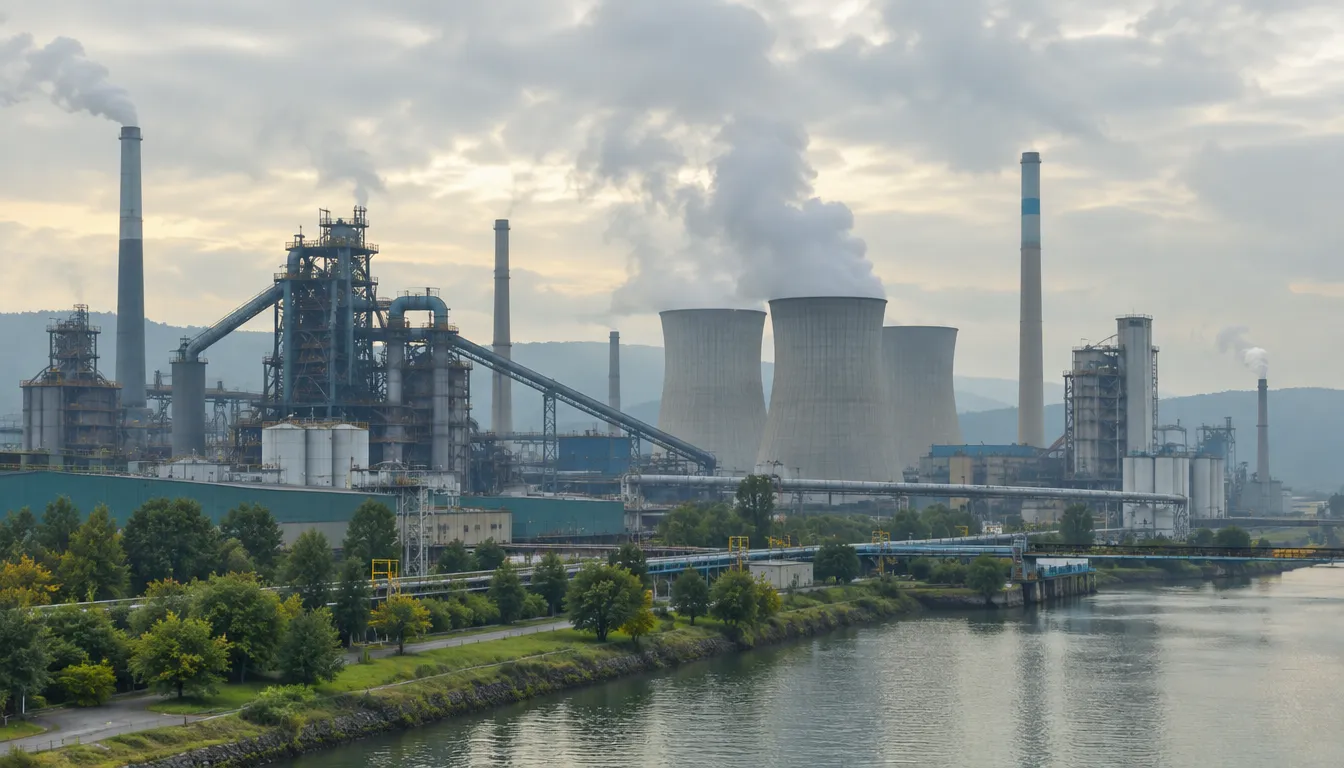
EU member states agreed to expand free ETS allowances for energy-intensive industries from 2026 to 2030, aiming to protect steel, cement and chemicals producers from carbon leakage.
EU member states have agreed to expand free ETS allowances for energy-intensive industries between 2026 and 2030, a move the Council of the European Union says will protect steel, cement and chemicals producers from carbon leakage during a sensitive stretch of the transition.
Ambassadors representing member states agreed on 16 September to release around 88 million allowances that had been set aside for free allocation to sectors covered by heat and fuel benchmarks under the EU Emissions Trading System. The Council added a further 33 million allowances that had previously gone unallocated because some installations did not meet existing ETS conditions, bringing the total addition to 121 million free ETS allowances over the period. Together the two pools amount to a meaningful addition against the roughly 6.3 billion allowances the ETS issues across all sectors over a typical multi-year trading phase, though the free ETS allowances at stake here are concentrated in a relatively small number of the most exposed installations.
The European Commission estimates the move represents around €6 billion in cost savings for the sectors affected, a figure the Council cited directly in announcing the agreement. Free ETS allowances reduce the carbon costs a covered installation must pay under the EU’s carbon market, and expanding them is one of the more direct levers available to policymakers trying to ease pressure on industries that compete internationally against producers not subject to equivalent carbon pricing.
“I welcome today’s agreement on the ETS benchmarks proposal,” said Darragh O’Brien, Ireland’s minister for climate, energy and the environment, who chaired the talks as part of Ireland’s presidency of the Council. He said the deal reflected “excellent co-operation” between member states and would help “safeguard jobs and ensure that our industries remain competitive” while the bloc continues towards its climate targets.
The revision responds to competitiveness concerns that industry groups and several member states raised after the Commission updated ETS benchmarks for the 2026 to 2030 period in June. Those tighter benchmarks reduced the volume of free ETS allowances available to many installations, and EU leaders acknowledged in June that a separate proposal would be needed to address the resulting pressure on energy-intensive sectors. The Commission presented that proposal in July, and Wednesday’s agreement is the Council’s response.
Negotiations with the European Parliament will now begin once MEPs set their own position on the file, with the Irish presidency aiming for a swift agreement so the revised benchmarks can take effect without disrupting the sectors they cover. The timing matters because ETS allowances for 2026 are already being allocated, so any delay in finalising the benchmarks risks leaving industrial installations uncertain about their carbon costs for the year already under way. Industry associations have previously warned that prolonged uncertainty over free ETS allowances makes it harder for operators to plan investment in lower-carbon processes, since carbon cost exposure is one of the inputs those business cases depend on.
The agreement lands alongside a broader set of carbon leakage measures working through Brussels, including the phased introduction of the Carbon Border Adjustment Mechanism, which is designed to apply equivalent carbon costs to imports as domestic industry faces under the ETS. Free ETS allowances and CBAM are meant to work together during the transition, with free allocation gradually phased down as CBAM coverage expands, a sequencing the Commission has previously flagged as central to curbing carbon leakage without leaving EU industry exposed in the interim.
For steel, cement and chemicals producers watching Brussels, the expanded free ETS allowances buy time rather than settle the underlying question of how quickly free allocation should be withdrawn as CBAM matures. That question now moves to the European Parliament, where industry groups are likely to push for the extra allowances to survive negotiations largely intact.
