


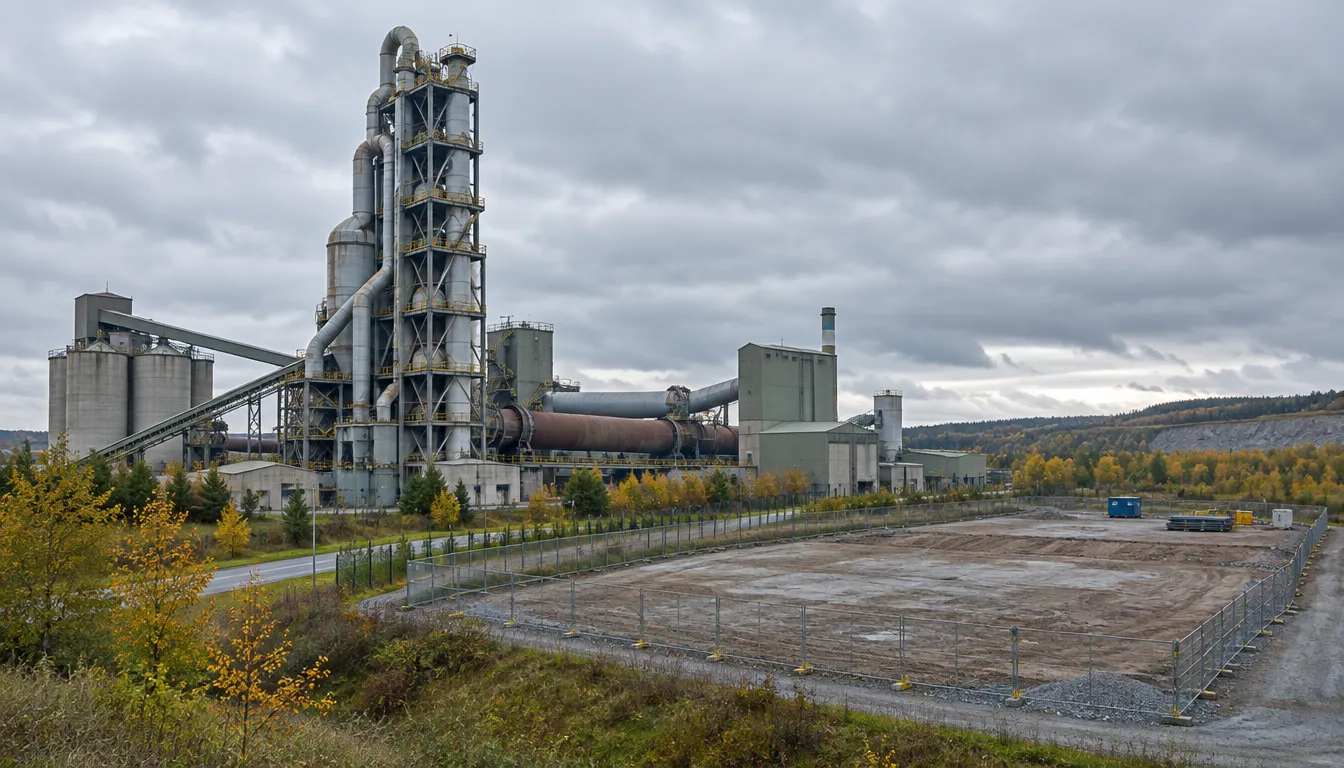
Heidelberg Materials has paused its GeZero carbon capture project at the Geseke cement plant in Germany, citing immature CO2 transport and storage infrastructure and no viable business case under current conditions.
Heidelberg Materials announced on 22 October that it has paused the GeZero carbon capture project at its Geseke cement plant in North Rhine-Westphalia, Germany. The company said the economic and regulatory framework does not yet support the investment. Cement production at Geseke continues.
The company pointed to the maturity of carbon dioxide transport and storage value chains. It said infrastructure would not arrive on time or at an acceptable economic risk. Under current conditions, it said, the project has no viable business case.
GeZero was designed to capture about 700,000 tonnes of CO2 a year from 2029 using oxyfuel technology. Oxyfuel capture burns kiln fuel in oxygen instead of air, which leaves a flue gas rich in CO2 that is easier to separate. Heidelberg Materials will now review and optimise the configuration of the GeZero carbon capture project.
The pause follows Heidelberg Materials’ earlier success in securing EU grants for large-scale carbon capture, utilisation and storage (CCUS) projects across Europe. The company said it will implement its current CCUS projects in Europe and North America first.
It reaffirmed its commitment to a flagship carbon capture project in Germany, alongside Brevik in Norway and Padeswood in the UK. The company also called for government-backed risk mechanisms for early investors in carbon capture and storage. It said onshore storage could improve the economics for inland plants.
For cement producers, the decision shows how much capture projects depend on transport and storage networks and on shared policy risk before capital is committed. A GeZero carbon capture restart will depend on those conditions changing.
