


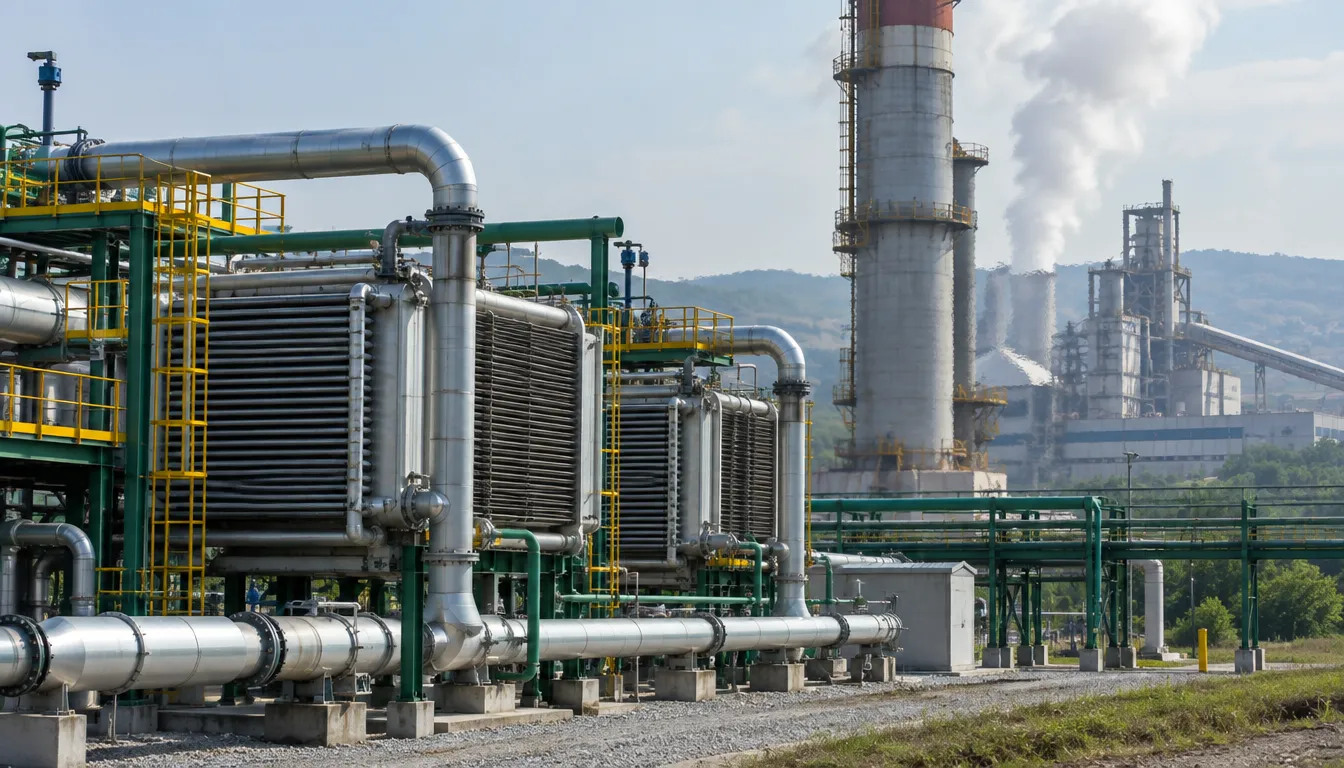
Kanin Energy raised $100 million from S2G Investments and Canada Growth Fund to expand waste heat recovery across cement, steel, refining and gas plants, cutting costs and emissions.
Kanin Energy has raised $100 million in new equity to expand waste heat recovery projects across North American cement, steel, refining and gas facilities, the Calgary-based developer said on 17 September.
S2G Investments led the round with a $50 million commitment, matched by a further $50 million from Canada Growth Fund. Kanin, founded in 2020, converts heat that would otherwise vent from industrial processes into electricity, and says up to 58% of the energy used across those processes escapes as waste heat that current operations do not capture. The company already works across the natural gas, cement, refining and steel sectors, providing services that span project development, construction and ongoing operations and maintenance rather than a single piece of equipment.
Waste heat recovery requires no additional fuel and produces no direct emissions, since it simply turns heat the plant has already paid to generate into usable power. That makes it one of the few decarbonisation options that can pay for itself through lower energy bills rather than relying only on subsidy or carbon pricing to make the economics work.
Kanin operates under what it calls an energy-as-a-service model. The company finances, develops, constructs and operates waste heat recovery systems itself, then sells the resulting power back to the host facility below prevailing market rates. That structure removes the upfront capital cost that has historically kept many industrial operators from installing recovery equipment, since Kanin rather than the plant owner carries the construction risk. Host facilities typically sign long-term power purchase arrangements with Kanin rather than owning the equipment outright, which keeps the recovery system off their own balance sheet while still letting them cut both energy spend and emissions from day one.
“Rising power costs remain a challenge for industrial operators to manage costs, operations and emissions,” said Janice Tran, Kanin’s chief executive. Marisa Sweeney of S2G Investments said waste heat recovery “has largely been underutilized but represents clear opportunity as grid constraints persist”, pointing to the growing strain that data centre demand and electrification are placing on North American grids.
That grid pressure is central to why investors are backing waste heat recovery now. Cement kilns, steel furnaces, refineries and gas processing plants all run continuously and generate large, predictable volumes of heat, making them well suited to recovery systems that need a steady thermal source to operate efficiently. Unlike wind or solar, waste heat recovery capacity does not depend on weather and can run whenever the host plant is operating, giving grid operators a source of firm, dispatchable low-carbon power.
The $100 million will let Kanin expand its project pipeline across the sectors it already serves, though the company has not disclosed how many new sites the funding will support or over what timeframe. Waste heat recovery has already drawn interest elsewhere in heavy industry, including UK efforts to treat industrial waste heat as a decarbonisation tool, and Kanin’s raise adds North America to a market that investors increasingly see as underexploited relative to its scale. Canada Growth Fund, a federal vehicle set up to crowd in private capital for emissions-reducing infrastructure, has increasingly targeted waste heat recovery and similar low-risk, high-volume technologies over more speculative bets, reflecting a wider shift among public investors towards projects with predictable, near-term returns.
For industrial operators facing both rising power costs and pressure to cut emissions, waste heat recovery offers a route that does not require replacing existing production processes. It works alongside a cement kiln or steel furnace rather than in place of it, which is part of why financiers see the model as easier to scale quickly than technologies that need a full process redesign. Kanin’s backers are betting that waste heat recovery can grow well beyond its current North American base as more grids come under similar strain from electrification and data centre growth in the years ahead.
