


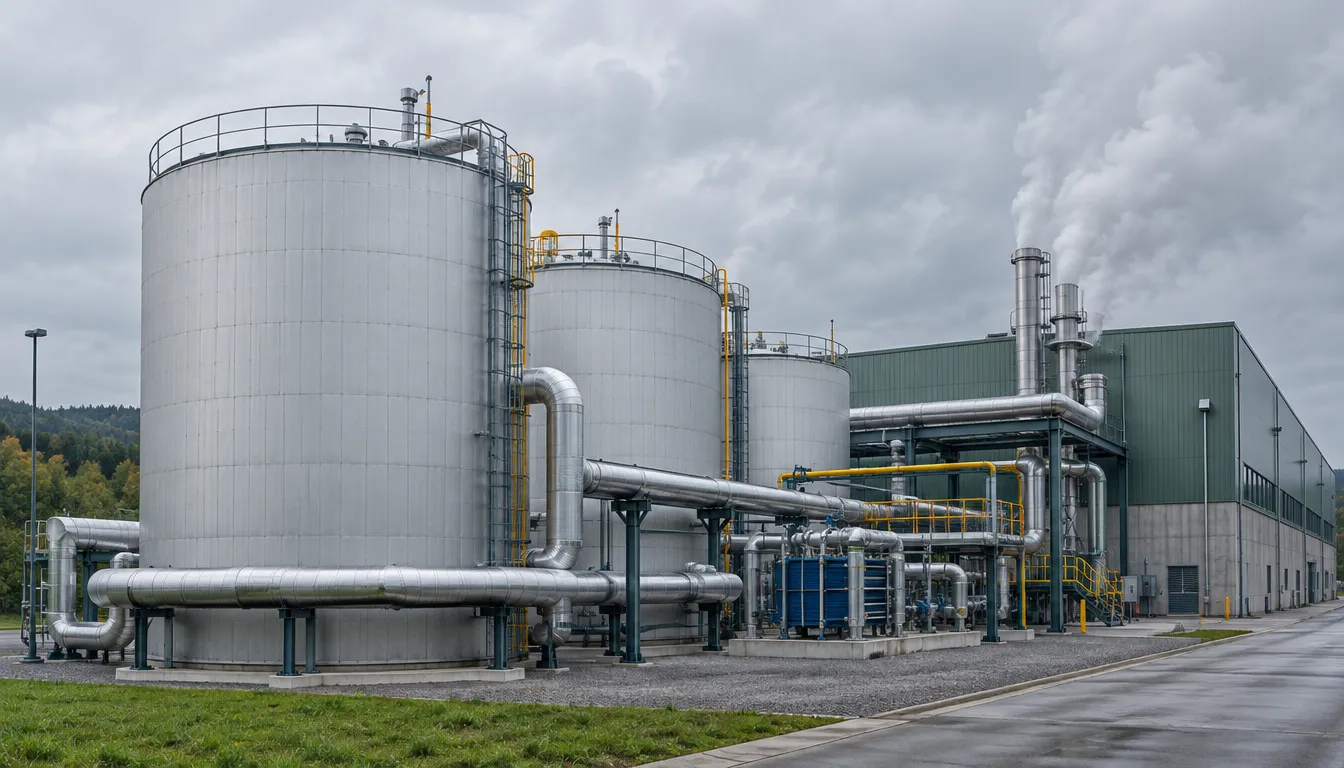
A new International Energy Agency report says thermal storage could enable cost-effective industrial electrification of around 40% of low- and medium-temperature fossil fuel heat, with food and dairy processing best placed to benefit.
The International Energy Agency said in a special report on electrification published on 22 September that thermal storage is becoming an increasingly promising route to industrial electrification, with roughly 40% of fossil fuel based low and medium temperature industrial heat demand now electrifiable at competitive cost using current technology and pricing.
Industry consumes nearly 40% of global final energy, the IEA found, yet electricity supplies only 28% of that demand. Electricity remains uncompetitive with fossil fuels for higher temperature processes in most markets, the agency said, but grids with a growing share of renewables are increasingly producing what the IEA called very low priced wholesale electricity during certain periods of the day, changing the economics of industrial electrification for some processes and narrowing the cost gap that has kept many plants on gas or oil for decades.
The agency singled out dairy production, food processing and textiles as sectors well suited to industrial electrification, because they mainly need hot water, low pressure steam and heat drying rather than the high temperatures used in steelmaking or cement production. Thermal storage systems, which typically bank heat in materials such as molten salts, ceramics or thermal oils and release it as steam or hot water on demand, let a plant buy power when it is cheap and draw down stored heat on its own production schedule, insulating operations from the volatility of wholesale electricity prices without needing to run a boiler around the clock or hold spare fossil fuel capacity for cloudy or windless periods.
Grids, however, “risk becoming a central constraint” on the pace and scope of industrial electrification, the IEA said, as demand for capacity and flexible connections grows faster than networks can be reinforced in many markets. That tension between cheap but intermittent renewable power and constrained grid capacity is precisely the gap thermal storage is designed to bridge, by shifting industrial electricity purchases into the hours when supply is most abundant and prices are lowest, rather than requiring new transmission capacity sized for peak demand that may sit idle most of the year.
How thermal storage deployments are scaling
Israeli thermal storage developer BrenX, which trades on the Nasdaq under the ticker BRNX and is based in Rosh HaAyin, illustrates the model the IEA describes. Its bGen system converts electricity into high temperature heat, stores it, and releases steam or hot water to a set schedule rather than to the rhythm of the grid. A 32 megawatt-hour system at Tempo Beverages in Israel is being commissioned to produce steam, while a 12 MWh installation is under construction at Wolfson Medical Center to replace fuel-oil boilers. A separate site in Hungary, currently a 1.2 MWp photovoltaic facility, is planned to expand to 20 MW of solar paired with 6 MWh of battery storage and 12.5 MWh of thermal storage, combining generation and storage on one site rather than relying solely on grid imports.
“Industrial companies need heat and steam on their own schedule, while the cost and availability of electricity vary through the day,” said Doron Brenmiller, chief business officer at BrenX. Earlier thermal storage projects include a 24 MWh installation with Enel in Italy and a system at SUNY Purchase College with the New York Power Authority in the United States, giving the technology a track record across both industrial and institutional heat customers on two continents and a range of climates.
The findings echo a broader trend in electrification of industrial heat, where progress has been steady despite technical and economic barriers that vary widely by sector. Similar dynamics are already shaping cleaner US factory heat projects, where cheap but inconsistent power pricing has proved as much a barrier as a spur to electrification.
For industrial operators weighing electrification, the IEA’s findings point to a narrower but real opportunity rather than a wholesale switch away from fossil fuels. Sectors with lower temperature heat demand and access to cheap off-peak power can cut emissions now using thermal storage to manage the mismatch between variable electricity prices and steady production schedules, provided grid capacity keeps pace with rising demand for flexible industrial connections in the years ahead.
