


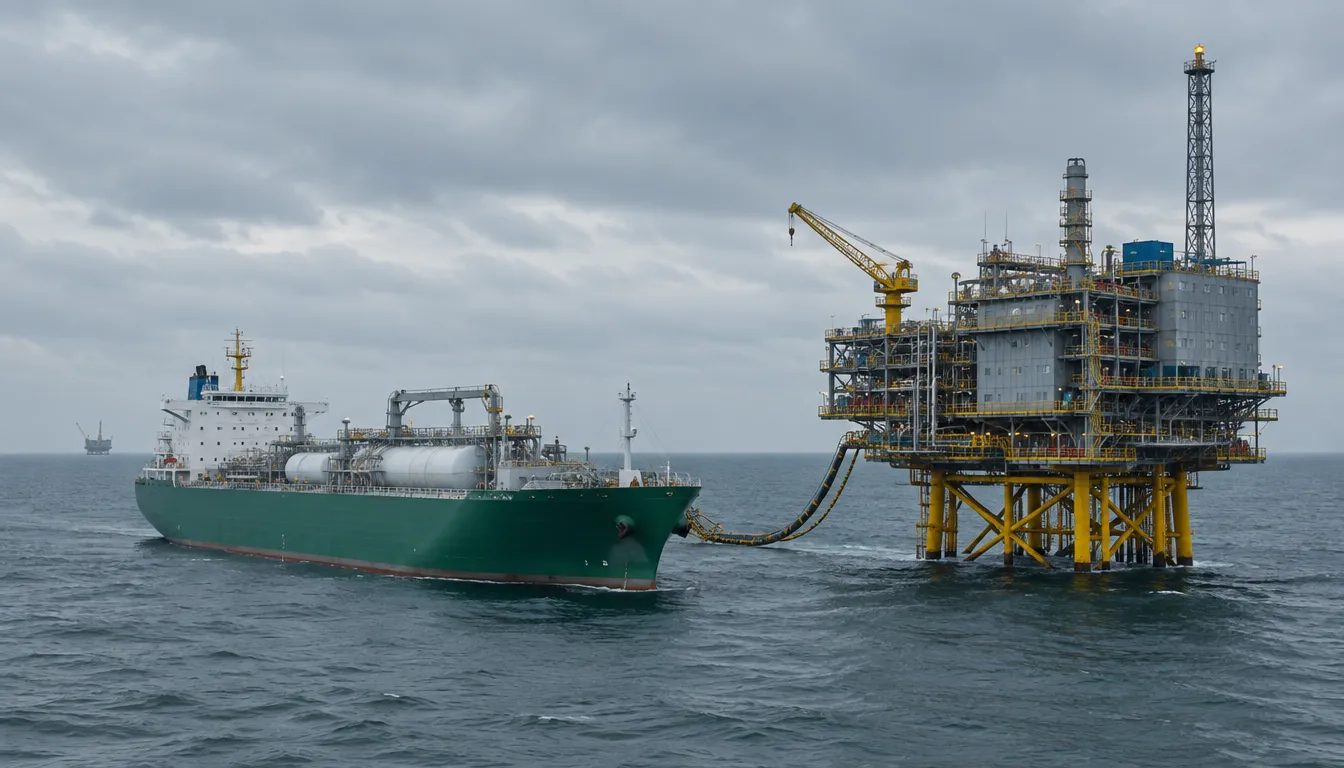
INEOS Energy has brought the Greensand offshore carbon storage site off Esbjerg into full operation, the European Union’s first full-scale facility, with capacity to store up to 8 million tonnes a year.
INEOS Energy, with partners Harbour Energy and Denmark’s Nordsøfonden, has brought the Greensand offshore carbon storage site off Esbjerg into full operation, formally opened on 18 September by King Frederik X of Denmark in front of industry and government officials. The facility is storing 400,000 tonnes of CO2 a year in its first commercial phase, with a path to between 4 million and 8 million tonnes annually at full capacity.
Sir Jim Ratcliffe, chairman of INEOS, said Greensand shows that industry can cut emissions while remaining competitive. “Europe will not achieve net zero by closing factories and exporting its jobs,” he said. “We need solutions that allow industry to remain competitive while reducing emissions. Greensand proves it can be done.”
The opening was attended by European Commissioner for Energy and Housing Dan Jørgensen, Danish Minister of Finance Peter Hummelgaard and CINEA director Paloma Aba Garrote, among other industry and policy figures. The EU wants to reach 50 million tonnes a year of carbon capture and storage capacity by 2030, rising to between 250 million and 280 million tonnes by 2040. Energy-intensive industries employing around 8 million people and generating €550 billion in annual value added are watching Greensand as an early test of the storage infrastructure that target depends on.
CO2 for the first phase is sourced from Danish biomethane plants, liquefied and trucked to Port Esbjerg, then shipped roughly 250 kilometres offshore aboard the Carbon Destroyer 1, described as the EU’s first purpose-built CO2 carrier, before injection around 1,800 metres beneath the seabed into the depleted Nini West oil field. Using a depleted oil field for storage means the geology and much of the offshore infrastructure needed to handle pressurised fluids was already characterised before the project began injecting CO2.
Dan Jørgensen said the launch proves “carbon storage is a practical reality” after years in which European carbon capture and storage projects existed mostly as plans and targets rather than operating infrastructure. INEOS said Greensand starts with biogenic CO2 but is ready to expand to receive CO2 from industrial emitters elsewhere in Europe, a step that would widen the project well beyond its initial biomethane supply base and turn it into shared storage infrastructure for other industrial sites.
That expansion path is the part of the project heavy industry is watching most closely. Steel, cement and chemicals plants that capture CO2 on site still need somewhere to send it, and a shortage of operating storage sites has been one of the practical constraints holding back capture investment across Europe, even where capture technology itself is proven. A working offshore site able to take third-party CO2 gives capture projects elsewhere in the region a storage destination that does not depend on building new infrastructure from scratch.
Reusing a depleted oil field also means Greensand did not need to prove an entirely new storage geology before starting operations, unlike sites planned under fresh seabed leases that must complete lengthy characterisation studies before injection can begin. That head start is one reason INEOS and its partners have been able to move Greensand from project announcement to full operation while several comparable European carbon storage sites remain in earlier development stages, still working through permitting and geological surveys before they can accept CO2.
The Esbjerg site adds to a run of European carbon storage and capture infrastructure reaching operation this year, including Yara’s carbon capture plant at Sluiskil. For heavy industry still weighing whether to commit to capture projects, Greensand gives operators a working offshore carbon storage route rather than a proposal still going through permitting, and its planned expansion beyond biogenic CO2 will be the clearest signal yet of how quickly that storage capacity can open up to industrial customers beyond the original partners.
