


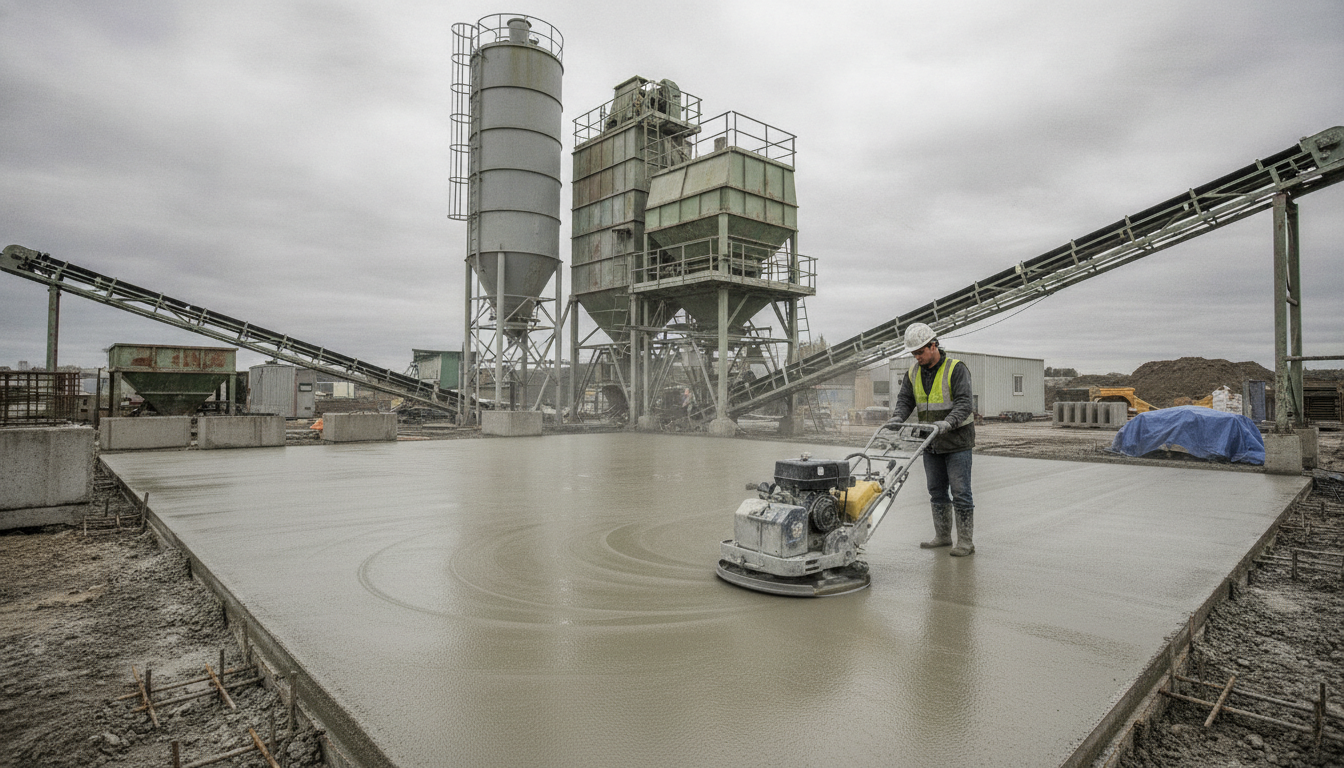
Carbon registry Isometric has put a draft Low Carbon Cement Protocol for environmental attribute certificates out to consultation until 21 September, built to meet the integrity criteria of SBTi’s Corporate Net-Zero 2.0 standard.
Isometric has published a draft Low Carbon Cement Protocol covering environmental attribute certificates for cement and concrete, according to Global Concrete. The registry announced the draft on 25 August and will hold a consultation on it until 21 September 2026.
The protocol is designed to meet the integrity criteria of the Science Based Targets initiative’s Corporate Net-Zero 2.0 standard. Isometric operates as an emissions registry across the UK and the United States.
What a certificate does for cement
Environmental attribute certificates separate the environmental attribute from the physical product through a mechanism known as book-and-claim. A buyer anywhere can purchase certificates and assign the associated carbon reductions to its net zero goals, while the money reaches producers decarbonising heavy industry.
Isometric set out the reasoning when it moved into certificates in April. First-of-a-kind production facilities are rarely located near demand, and transporting green cement long distances is neither practical nor efficient. Book-and-claim removes that geographic constraint, which is what lets a buyer in one market fund a plant in another.
The demand runs ahead of the standards
Steel and cement production account for approximately 14% of global carbon emissions, on Isometric’s figures, and emissions per tonne of cement have been rising since 2015. Buyers have already moved. Microsoft has established certificate-based partnerships for low-carbon cement with Fortera and Sublime, and for green steel with Stegra. Meta has signed with Electra for low-carbon iron. The Sustainable Concrete Buyers Alliance and the Sustainable Steel Buyers Platform count Amazon, Google, Meta and Microsoft among their members.
Certification is what the market lacked. Quality guidelines for low-carbon cement and steel exist, and there has been no rigorous standard to certify the corresponding certificates against. High-quality certification establishes that environmental claims are real, traceable and transparent, and that each certificate can only be claimed once.
Isometric said in April that its Book and Claim Module, due in May, would align with ISO 22095-3 and with the forthcoming second version of the SBTi Corporate Net Zero Standard, covering issuance, tracking and retirement of certificates across low-carbon materials, fuels and energy.
“Demand for EACs is growing, but the infrastructure to support it doesn’t yet exist,” said Eamon Jubbawy, founder and chief executive of Isometric. “We built that foundation for carbon removal and EACs are the natural next step. Industrial decarbonization cannot happen without functioning markets, and those markets cannot function without rigorous certification.”
Why the SBTi alignment matters
Alignment with Corporate Net-Zero 2.0 is the commercially significant part of the draft. A certificate a corporate buyer cannot count towards a validated science-based target has limited value to that buyer. Tying the cement protocol to the SBTi criteria is what makes the certificates usable inside the accounting these companies have already committed to.
The consultation runs to 21 September. Cement producers with lower-carbon lines, and the buyers funding them, have until then to test whether the quantification and verification rules match what their plants actually measure. A protocol that asks for data a cement works does not collect will go unused, whatever its integrity criteria.
