


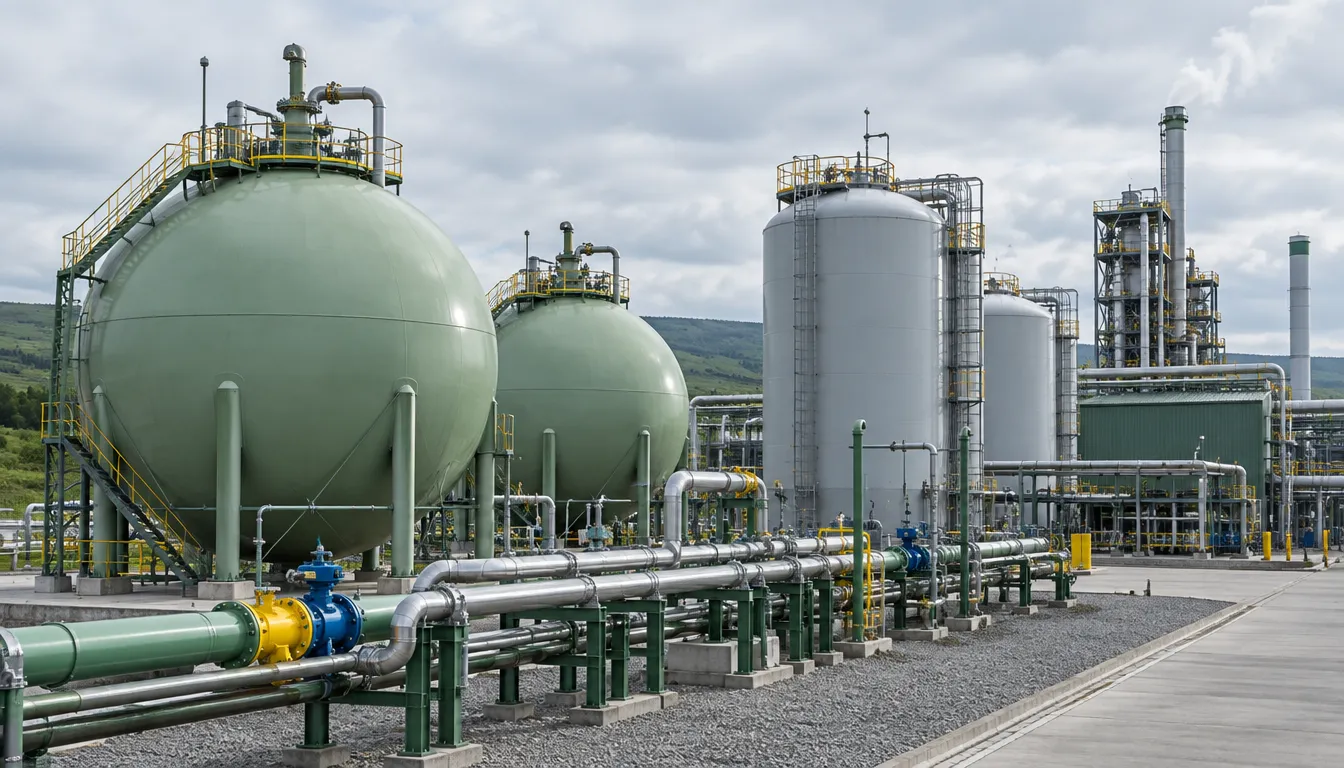
The Hydrogen Council’s latest Hydrogen Compass report puts the global low-carbon hydrogen pipeline at $130 billion and 6.9 million tonnes a year, with ammonia the leading offtake.
The Hydrogen Council said in its latest annual Hydrogen Compass report that the global low-carbon hydrogen project pipeline has grown to $130 billion and 6.9 million tonnes a year of capacity across 570 projects, with 90% of that capacity under construction or already operational. The figures mark a maturing pipeline, with a growing share of projects moving past the announcement stage into construction and operation.
Ammonia remains the dominant offtake for the pipeline, accounting for 43% of the 4.2 million tonnes a year of confirmed low-carbon hydrogen offtake, and together with refining makes up nearly three-quarters of confirmed demand globally. That offtake is concentrated in destinations across North America, Europe and China, reflecting existing ammonia and refining infrastructure that can absorb low-carbon hydrogen without large downstream retrofits.
Operational capacity grew 70% over the past year to around 1.7 million tonnes a year and is projected to reach about 3.8 million tonnes a year in 2027. China accounts for more than half of global committed renewable hydrogen capacity and the majority of new operational renewable capacity added since 2025, extending a lead the country has built through domestic electrolyser manufacturing and renewable power capacity.
The report identifies energy security and food system resilience as drivers now sitting alongside decarbonisation and industrial growth in low-carbon hydrogen investment decisions, a shift from a pipeline that was previously justified mainly on climate grounds. “The debate has shifted from whether hydrogen can deliver to how fast countries choose to build,” the Hydrogen Council said, adding that implementing existing policies could nearly double firm demand by 2030. The Council also said that wherever countries deploy hydrogen solutions suited to their own context and back them with policy, competitive hydrogen ecosystems are taking hold.
One deep dive in the report looks at India’s domestic renewable ammonia build-out, which is intended to reduce exposure to volatile import markets rather than compete directly on price with fossil ammonia. Ammonia import prices into India have ranged from below $300 a tonne to more than $1,000 a tonne over the past five years, a swing the report links directly to global gas price volatility. The Solar Energy Corporation of India is backing 724,000 tonnes a year of domestic renewable ammonia production across thirteen contracted projects, with the first reverse-auction round settling a ten-year fixed price of roughly $565 to $735 a tonne, giving buyers a price outside that volatile range.
The gap between announced and operating capacity has narrowed markedly on the Hydrogen Council’s figures, from a pipeline once dominated by projects still seeking final investment decisions to one where 90% of committed capacity is now under construction or running. For governments setting hydrogen strategy budgets, that shift changes the argument for continued public support, from de-risking early projects to ensuring enough operational capacity reaches the offtake buyers the report identifies, and to building the storage and transport links that connect new low-carbon hydrogen supply to existing ammonia and refining demand.
The concentration of offtake in ammonia and refining reflects where low-carbon hydrogen can plug into existing industrial processes with the least new infrastructure, since both sectors already handle hydrogen or ammonia as a feedstock. Broader industrial uses, including steelmaking and heavy transport fuels, still make up a smaller share of confirmed offtake, even as project developers continue to announce capacity aimed at those markets. Closing that gap is likely to depend on further cost declines and on offtake agreements that give industrial buyers the certainty ammonia producers already have.
The findings add to a run of national low-carbon hydrogen investment this year, including France’s €778 million award to its first three low-carbon hydrogen projects. For industrial buyers and investors, the Hydrogen Council’s figures point to a pipeline shifting from early-stage announcements toward projects that are actually under construction, even as the offtake mix stays concentrated in ammonia and refining rather than broader industrial use.
