


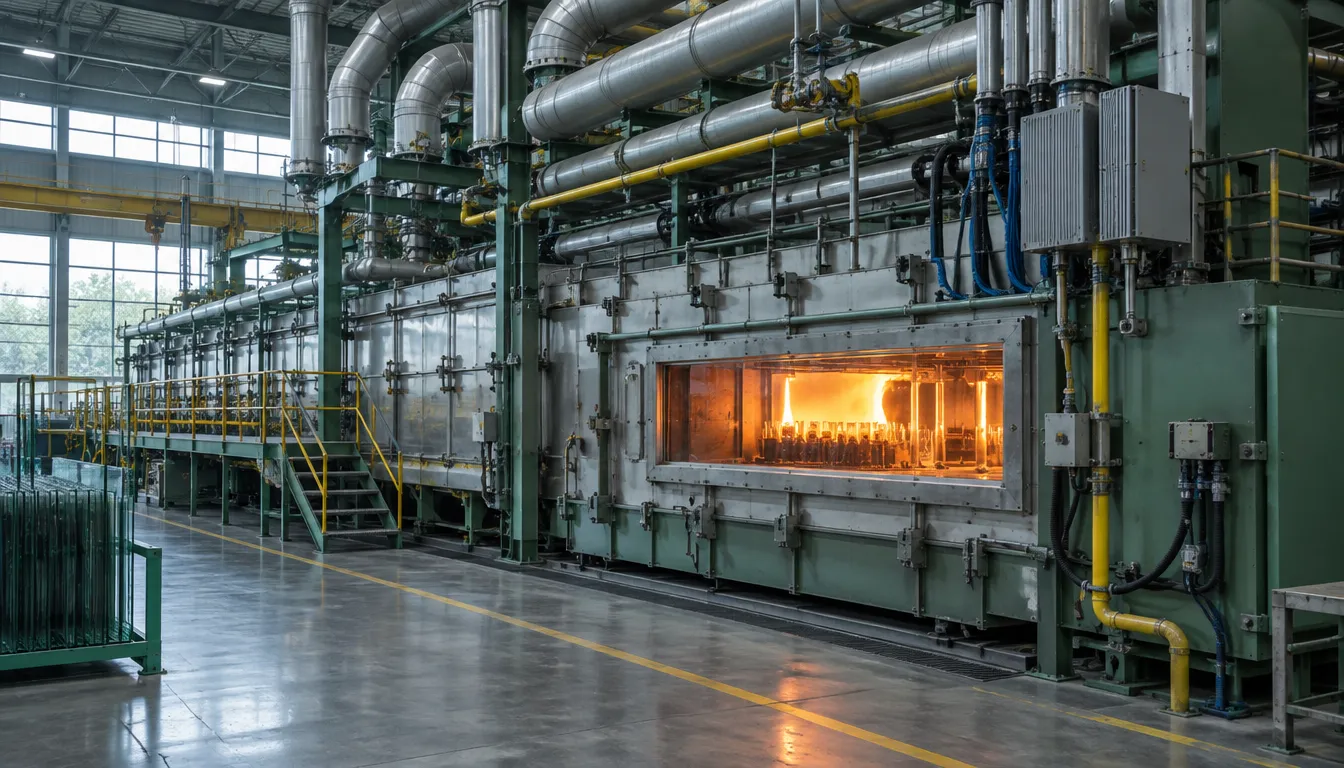
France commissioned three hybrid furnaces in 2026, positioning its glass sector as Europe’s largest adopter of hybrid furnaces, with some sites cutting carbon dioxide emissions by up to 64%.
France’s glass sector has commissioned three hybrid furnaces this year, positioning the country to become the European nation with the largest hybrid furnace capacity in the container glass industry, according to the Federation of Glass Industries.
The three furnaces are running at O-I Glass in Veauche, Verallia in Saint-Romain-le-Puy and Verescence at Mers-les-Bains, all in France. Hybrid furnaces combine gas combustion with electric boosting, cutting reliance on fossil fuel while avoiding the higher capital cost and grid connection demands of building a fully electric furnace from scratch on sites not designed for the extra power load a full electric rebuild would require.
Some hybrid furnaces have achieved carbon dioxide emission reductions of up to 64%, the federation said, while fully electric ovens are already operating in the perfumery and pharmaceutical segments, where smaller furnace sizes and lower output volumes make full electrification more practical than in large-scale container glass production. France has more than 150 decarbonisation and innovation projects under way across its glass sector, spanning furnace technology, recycled content and fuel switching, according to the federation’s own tally of work across its member plants.
“Industrial sovereignty is not just about the ability to produce; it is also based on the ability to maintain efficient, innovative sectors,” said Jacques Bordat, president of the Federation of Glass Industries.
France is Europe’s second-largest glass producer, running 17 glass factories and 13 processing centres that employ nearly 7,000 factory workers, plus a further 1,600 people in collection and processing roles across the recycling supply chain that feeds cullet back into the furnaces. The sector is investing in hybrid and electric furnace technology partly to defend that industrial base against competition from lower-cost imports and partly to meet tightening national and EU carbon targets for heavy industry over the coming years.
The push comes as France’s glass packaging trade position weakens. Some 40% of the glass food packaging used for French products is now imported, up from 20% two decades ago, making France the only European country with a glass food packaging trade deficit in this category. That combination of rising import competition and a shrinking domestic manufacturing footprint gives the furnace investment programme added urgency beyond its climate rationale, since idle domestic capacity cannot be easily rebuilt once lost.
Hybrid furnaces are typically seen as a bridging technology between conventional gas-fired furnaces and full electric melting, since they let operators retrofit existing assets rather than write off a furnace part-way through its working life. That makes them attractive to a sector where a single furnace rebuild can cost tens of millions of euros and take a plant offline for months, a disruption few operators can absorb without warning customers well in advance.
Container glass furnaces are typically rebuilt every ten to fifteen years, which gives operators a natural decision point to switch technology rather than simply replace like for like. France’s cluster of three hybrid conversions in a single year suggests several plants reached that decision point close together, rather than the shift reflecting one company’s isolated choice.
A hybrid furnace at a Czech glass plant has already shown a year of sustained emissions cuts and higher recycled glass use, evidence that hybrid furnaces can deliver over time rather than only at start-up, when performance gains are typically at their strongest before settling into steady-state operation.
Europe’s wider container glass sector has been pushing to decarbonise while warning that policy and infrastructure delays could slow the transition across the continent. France’s furnace investment gives it a head start, but the sector’s leaders argue that maintaining production capacity, not just cutting emissions, will determine whether the domestic industry keeps pace with import competition over the coming decade, particularly as import volumes continue to rise each year.
